The Room I Left Empty
My parents said they could only afford to take one daughter on vacation, so they chose my sister and left me behind. When they came home, my room was empty, every piece I had ever bought was gone, and the silence told them I was never coming back.
For two weeks, my room waited at the end of the hallway like a closed mouth.
That was how my mother described it later, in one of the voicemails I did not answer. She said she opened the door expecting to see my bedspread, my stack of books, the little desk lamp with the crooked shade, the framed print I bought at a street fair because it reminded me of a place I had never been. Instead, she found bare carpet, nail holes in the wall, and one rectangle of dust where my dresser used to be.
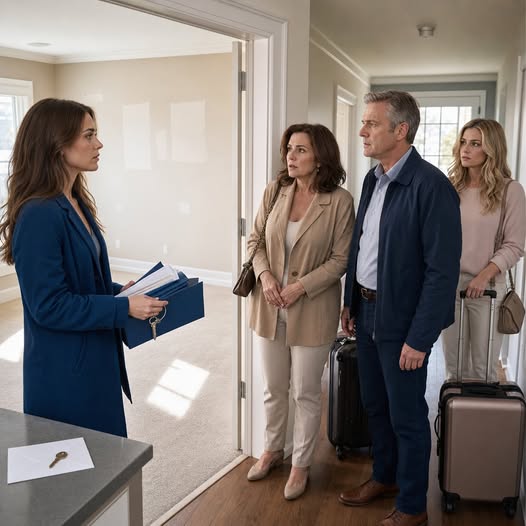
She said the room looked abandoned.
She was wrong.
It looked returned.
Every item I had paid for was gone. Every receipt was copied. Every loose thread tying me to that house had been cut with the kind of careful patience only a daughter can learn after years of being expected to smile while unraveling herself for everyone else.
But the night it began, none of them knew that. They were too busy passing the potatoes.
The kitchen smelled like rosemary and garlic. My mother, Clara, believed roast chicken could repair almost anything. Bad news, good news, uncomfortable news, ordinary Sunday evenings—she put a chicken in the oven, scattered potatoes around it, and let the house fill with a smell that made people believe they were safe. For years, that smell had worked on me. It meant home. It meant family. It meant the four of us around the table, even if I was the one who had chopped the vegetables, set out the dishes, folded the napkins, and remembered that Dad liked his green beans cooked longer than everyone else’s.
That night, I had rubbed the butter and herbs under the chicken skin because Mom said her hands were bothering her. I had peeled potatoes while she stood at the kitchen island scrolling through her phone. I had wiped down the counters, filled the water glasses, and pulled the good platter from the cabinet above the stove because she always forgot it was too high for her to reach comfortably.
My younger sister, Lily, had been upstairs laughing into her phone.
My father, Mark, sat in the living room with a game murmuring on television and another game open on his phone.
It was an ordinary Sunday in our split-level house in suburban Ohio, ordinary in the way routines can become so familiar that nobody questions who carries the weight of them.
Dinner was on the table at six.
Dad came in without looking up, one thumb still moving across his phone screen. Lily bounced down the stairs in a cream sweater she had bought with money she still owed me from a shopping trip in March. Her blond hair fell in loose waves over her shoulders, and she smelled like vanilla body spray and the kind of effortless attention I had spent my entire life watching people give her.
“This looks amazing, Mom,” she said, reaching for the serving fork.
“Victoria helped,” Mom said.
Not proudly. Not warmly. Just factually, the way someone might mention that the dishwasher had finished running.
“I did the chicken,” I said lightly, sliding into my usual chair.
Nobody heard me, or maybe they did and the sentence simply had nowhere to land.
My chair wobbled slightly when I sat down. It had done that for years. Nobody else used it because of the wobble, so it became mine by default, like most inconvenient things in that house. I served myself a small portion of potatoes and a few green beans, then listened as the conversation moved around me. Dad talked about a golf outing with a man from church. Mom talked about a handbag she saw on sale. Lily talked about a coworker who had gotten engaged and said the ring was “small but sweet,” which was Lily’s way of being unkind while smiling.
I nodded in the right places.
I had become very good at nodding.
Then Mom set down her wine glass on the lace doily beside her plate. A red circle bloomed under the stem. She did not notice. I did. I always noticed the things I would have to clean later.
“Oh,” she said, brightening. “That reminds me. I booked the tickets today.”
My fork paused halfway to my mouth.
“The tickets?” I asked.
“For the anniversary trip.” Mom beamed at Lily. “Italy is officially happening.”
For months, they had talked about a family vacation for their thirtieth wedding anniversary. Italy. Rome, Florence, maybe the Amalfi Coast if the budget allowed. I had pictured it more times than I admitted. Not because I expected luxury. I just wanted to walk somewhere nobody knew me as the reliable one. I wanted to stand in a sunlit piazza with a paper cup of gelato and feel, for once, like I was part of the memory instead of the person making sure the memory happened for everyone else.
“That’s great,” I said. “When do we leave?”
The table shifted.
Not visibly. Nobody dropped anything. Nobody gasped. But the energy changed so quickly that I felt it before I understood it.
Dad cleared his throat and looked at his phone.
Lily reached for her water, suddenly very interested in the ice.
Mom gave me the smile she used when she was about to explain why disappointment was my responsibility to handle gracefully.
“Well, sweetie,” she said.
I hated that word in her mouth. Sweetie was always a cushion placed over something sharp.
“We ran the numbers,” she continued, “and we just can’t afford to take both girls this year.”
“Both girls?” I repeated.
“You and Lily.”
“There are four of us.”
“Obviously your father and I are going,” she said, with a little laugh that made my face heat. “It’s our anniversary.”
I looked from her to Dad. “So you’re taking Lily.”
Lily gave a small, helpless shrug, the kind people give when they are not sorry enough to decline the benefit.
Mom reached over and patted her hand. “She’s had such a hard year.”
A hard year.
Lily’s hard year consisted of a breakup with a man she had dated for three months, quitting a part-time job because the manager expected her to arrive on time, and spending several weeks “finding herself,” mostly through online shopping and brunch. In my family, Lily’s inconveniences were treated like storms. My sacrifices were treated like weather.
“I see,” I said.
Dad finally looked up. “Victoria, you’re twenty-nine. You’re an adult. You can take your own vacation anytime you want.”
The words sat between us, neat and cruel.
I was an adult.
An adult who had given Mom eight thousand four hundred twenty-one dollars when they needed help refinancing the mortgage. An adult who had covered grocery runs when Dad’s hours were reduced. An adult who co-signed Lily’s car loan and then made the payments when she stopped. An adult who bought the washer and dryer, the living room television, the new refrigerator, and the couch Mom said would help her back. An adult whose money was family money when they needed something, but whose seat on an airplane was suddenly a personal luxury.
Lily twirled her fork through her potatoes. “Don’t worry, Vicki,” she said with a bright little smile. “I’ll send you pictures.”
Dad chuckled.
Mom gave Lily the fond look she had not directed at me in years.
Something inside me snapped so quietly no one at the table heard it.
It was not a dramatic breaking. There was no raised voice, no tears, no chair pushed back. It was more like a thread pulled too tight finally giving way. For most of my life, I had believed that if I gave enough, helped enough, understood enough, and asked for little enough, one day they would look at me and see a daughter instead of a dependable resource.
That night, with rosemary in the air and my sister smiling over mashed potatoes, I understood they never would.
I picked up my fork.
“That sounds wonderful,” I said. “I hope you have the best time.”
They accepted the answer as surrender.
Of course they did. Good Victoria always understood. Good Victoria never ruined dinner. Good Victoria cleared the plates afterward and wrapped leftovers in foil and wiped the red wine ring from the doily before it could set.
So that was what I did.
At the sink, hot water ran over my hands while their voices drifted from the living room. They had moved on to hotels, luggage, walking shoes, and whether Lily should buy new dresses for the trip. I scrubbed the roasting pan in slow circles, looking at my reflection in the dark kitchen window.
I did not look angry.
That surprised me.
I looked awake.
After the dishes were done, I went to my bedroom and closed the door.
My room was small, the same room I had slept in since childhood, though at twenty-nine it felt less like a bedroom and more like evidence of a life paused too long. There was a secondhand desk under the window, a narrow bed with a gray quilt, two bookcases, a printer that rattled when it worked, and a stack of bills clipped together with a binder clip. My laptop sat on the desk beside a chipped mug full of pens.
From downstairs, I could hear Lily laughing at something on TV. Mom laughed next. Dad’s voice joined in, low and amused.
I opened my banking app.
At first, I did not know what I was looking for. I only knew that if I did not turn the feeling in my chest into something solid, I might spend another ten years calling it love.
I set the transaction history back as far as the app allowed. Then I opened my laptop and pulled the old statements from email archives. One by one, the numbers appeared.
October 2015: Transfer to Mom, $508. Roof repair.
January 2016: Transfer to Lily, $300. Textbooks.
June 2017: Credit card payment for Dad, $1,200. “Just this once.”
March 2018: Appliance store, $2,764. Refrigerator.
Every line carried a memory. The washer and dryer purchased after Mom cried in the laundry room because the old set finally quit. The couch bought during a holiday sale because Mom said her back hurt on the old one. The television Dad wanted because “after everything we’ve been through, it would be nice to enjoy the game properly.” Grocery charges, phone plan payments, car payments, insurance, pharmacy co-pays, emergency transfers, forgotten reimbursements.
Then the big one.
$8,421.
Mortgage refinance help.
I remembered the night Mom asked for it. She sat with me at the kitchen table, twisting a paper napkin until it tore. “It’s temporary, Vicki,” she said. “We’ll pay you back in a year. I promise.”
That money had been my school fund. My second chance at finishing the degree I abandoned when Dad lost his job and the house grew tight with panic. I gave it to her the next morning.
They never paid it back.
When I printed the statements, the old machine groaned like it resented being part of the truth. Page after page slid into the tray. I sat cross-legged on the floor with a highlighter and a calculator. The room filled with paper. Ten years of transactions spread around me like fallen leaves.
At midnight, I wrote the total on a yellow legal pad.
$112,419.
I stared at the number until it stopped looking like money.
It became time.
It became night shifts at the café after class until I finally stopped enrolling. It became winter coats I did not buy, dental appointments I delayed, vacations I never took, apartments I never applied for because my savings never stayed mine long enough. It became a decade of my twenties converted into someone else’s comfort.
They had not taken it all at once. That would have been easier to recognize.
They had taken it politely. Gratefully. Tearfully. Casually.
They had called it family.
I stood up and found an old expandable folder in the back of my closet. It was blue, with a broken elastic strap. I repaired the strap with a paper clip, then began sorting. Bank statements. Receipts. Email requests. Screenshots. The car loan documents with my signature under co-signer. The appliance warranties. The phone plan contract. The credit card bills showing purchases made for the house.
At the front of the folder, I wrote one word in black marker.
REALITY.
It was not revenge.
Revenge would have required me to keep them at the center of my life. This was something cleaner. A resignation. An audit. A closing statement.
By dawn, my decision had shape.
I called out sick from work, something I almost never did, and spent the day making quiet plans.
There was a remote position I had applied for months earlier and never believed I would get. The company had offered me the job the previous week, but I had not accepted because it would require relocation to another time zone, another life, and I had been afraid of what my family would do without me. That morning, I emailed the recruiter back.
I accept.
Then I searched furnished rentals in small towns far away from Glen View, far away from that kitchen, far away from the wobbling chair. I found a cabin outside a mountain town in Colorado, small and simple, with a porch, reliable internet, and a month-to-month lease. I paid the deposit from the last part of my savings and felt my stomach twist at the number.
Then I remembered $112,419.
I booked the cabin.
The next call was to a moving company that specialized in discreet relocations. The woman who answered sounded calm in a way I needed.
“Are you leaving quickly?” she asked.
“Yes.”
“Do you feel safe?”
I looked at my bedroom door. “Physically, yes.”
“That matters,” she said. “We can help with the rest.”
I hired them for the morning after my family’s flight.
For two weeks, I behaved exactly the way they expected me to behave.
I watered plants. I listened to trip details. I hemmed a pair of Lily’s pants because she said the tailor wanted too much money. I drove Mom to Target because she needed travel-size bottles. I nodded while Dad complained about airport parking. I said, “That sounds beautiful,” when Lily showed me a dress she had bought for Rome.
Every night, after they went to bed, I packed quietly.
Not boxes. Not yet. Boxes would be noticed. I sorted. I made lists. I photographed serial numbers on appliances. I scanned receipts to my lawyer, a practical woman named Denise Cooper whom I found through a consultation service. She reviewed everything and said, “If you purchased it and retained ownership, document it. Do not take gifts. Do not take things you cannot prove. Keep it clean.”
Clean.
I liked that word.
The morning they left, the sky was a clear autumn blue.
Their excitement filled the house like a bright, selfish music. Suitcases rolled down the hallway. Lily complained that her bag was overweight. Mom checked her passport seven times. Dad loaded the car with the solemn focus of a man preparing for an expedition instead of an anniversary trip paid for, in no small part, by years of my quiet labor.
I stood at the kitchen window holding coffee in both hands.
Mom came back inside for her sunglasses. “Keep an eye on the mail, sweetie,” she said, kissing my cheek quickly. “And don’t forget the plants.”
“I won’t.”
Lily appeared in the doorway, phone in hand. “Don’t mess with my room while I’m gone.”
“I won’t.”
Dad lifted the last suitcase into the trunk. “Try to enjoy the quiet,” he called.
“I will,” I said.
It was the truest thing I had said to them in years.
They pulled out of the driveway laughing. Lily waved dramatically from the back seat. Mom waved too. Dad gave one short honk as they turned onto the street.
They thought they were leaving me behind for two weeks.
They did not know they were giving me the only thing I needed.
Time.
When their car disappeared, the house became still.
For several minutes, I stood in the kitchen and listened. No TV. No Lily’s music upstairs. No Mom calling my name from another room. No Dad asking if I had seen his glasses while they sat on top of his head.
The silence was not lonely.
It was spacious.
At ten, the moving truck arrived.
Two movers in gray shirts stepped out. The older one introduced himself as Dave. The younger one was Miguel. They were polite, efficient, and did not ask personal questions. I handed Dave the folder marked REALITY.
“Everything I’m taking is documented,” I said. “Receipts, statements, warranties. If there’s any question, ask me before moving it.”
Dave opened the folder, glanced through the first pages, and nodded. His expression softened, just slightly.
“You point,” he said. “We’ll carry.”
The living room went first.
The television came off the wall, leaving a pale rectangle behind. The soundbar, the stand, the couch, the two armchairs, the coffee table I assembled myself on a rainy Saturday while Dad watched from the recliner and told me I was “better at that sort of thing.” Each piece passed through the front door into the clean morning light.
The room began to echo.
In the kitchen, they took the freestanding refrigerator, the microwave, the espresso machine Mom had wanted for Christmas, and the set of cookware I bought after she complained that the old pans made everything stick. I left the old wooden table because it was theirs. I left the mismatched chairs. Even the wobbling one.
In the laundry room, Dave and Miguel disconnected the washer and dryer set I was still paying off. When Miguel rolled the washer toward the door, he looked back at me.
“You sure?”
I looked at the receipt in my hand.
“Yes.”
I did not touch Lily’s room.
There were things in there I had bought. A laptop. A bed frame. A vanity mirror with lights around it. But those had been gifts, even if she had never once thanked me properly. Gifts are doors you close behind you. I would not reopen them just to prove a point.
My own room was last.
Books into boxes. Clothes into wardrobe cartons. Desk, lamp, nightstand, framed print, bedding, the small rug beneath my bed. When the movers carried out the dresser, dust rose in the empty space behind it. The wall looked naked. I stood there for a moment, looking at the room where I had waited for my life to begin while everyone else used my waiting as storage.
By late afternoon, the house had changed into a place I did not recognize.
Not ruined.
Revealed.
Without the things I had bought, the comfort was gone. The living room held Dad’s old recliner and the side table with a water ring he never used a coaster for. The kitchen hummed with emptiness where the refrigerator had stood. The laundry room smelled faintly of detergent and open space. My bedroom was bare except for carpet lines and nail holes.
On the kitchen counter, I placed a white envelope.
On the front, I wrote: Family.
Inside was one sheet of paper.
Mom, Dad, and Lily,
Everything I took belongs to me. Every item is documented, and my attorney has copies of the receipts.
Anything that was truly yours is still here.
For years, I helped pay for this house, your bills, Lily’s car, groceries, appliances, furniture, and emergencies. I was told I was responsible when I gave and selfish when I hesitated.
I am done being the backup plan.
I am done being the second daughter when love is given, and the first person called when money is needed.
I hope your trip is everything you wanted.
I am going to build a life that belongs to me.
Victoria
I folded the note carefully.
Then I placed my house key on top of it.
The key looked small there, almost harmless. It had opened the front door since I was twelve. It had let me in after late shifts, after grocery runs, after years of coming home to a place where I was needed but not cherished.
I did not cry when I left it.
I walked outside into the afternoon sun. Dave closed the back of the moving truck and handed me the clipboard.
“Long drive?” he asked.
“Three days.”
He nodded. “Good luck, ma’am.”
“Thank you.”
I got into my car. A suitcase sat in the back seat. A cooler of snacks was on the floor. The blue folder lay on the passenger seat like a witness.
I pulled away from the curb.
At the stop sign, I almost looked in the rearview mirror.
Almost.
Then I kept my eyes on the road.
The first night, I slept in a motel outside Indianapolis where the carpet smelled faintly of lemon cleaner and the ice machine groaned all night. I ate a cheeseburger from the diner next door and watched headlights move across the curtains. My phone stayed silent because my family was somewhere over the Atlantic, still believing the world they left behind would be waiting exactly as they wanted it.
The second day, I drove through rain that turned the highway silver. I listened to music I had not chosen for anyone else. Nobody complained about the volume. Nobody skipped my songs. Nobody asked me to stop for something they had forgotten. I ate gas station pretzels for lunch and laughed when I realized there was no one to disappoint.
By the third day, the land had opened wide.
Colorado appeared in layers—flat roads, rising hills, distant peaks like a promise drawn along the horizon. The air felt different when I stepped out at a rest stop. Thinner. Cleaner. Cold enough to wake me up.
The cabin was smaller than the photos made it look.
That made me love it more.
It had one bedroom, a little kitchen with blue cabinets, a stone fireplace, and a porch that looked out toward pines. The furniture was simple. A small couch, a round table, a bed with a thick quilt. The silence inside was not the silence of waiting to be useful.
It was the silence of belonging to myself.
The movers arrived the next morning with my things. My desk fit perfectly near the window. My books filled the shelves beside the fireplace. The lamp with the crooked shade sat on the nightstand, warm and ridiculous and mine.
For two weeks, I learned my new life in pieces.
Coffee on the porch at sunrise. Remote work at the desk while pine branches moved outside the window. Groceries from a small market where the cashier called everyone “hon.” Evenings with soup on the stove and a book in my lap. Some nights, loneliness walked through the room and sat beside me, but it was not the same loneliness I had known at home.
That loneliness had been crowded.
This one was honest.
The storm broke on a Tuesday morning.
My phone buzzed before sunrise.
Mom.
Victoria, what have you done? The house is empty. Where is everything? Call me right now.
I read it while waiting for the coffee to drip.
Then Dad.
This is unacceptable. You need to call immediately.
Then Lily.
I can’t believe you did this. Mom is crying. The living room is empty. The fridge is gone. What is wrong with you?
The messages kept coming. Shock. Anger. Accusations. Not one asked where I was sleeping. Not one asked if I was safe. Not one said, Why did you feel you had to leave?
They were not grieving me.
They were grieving comfort.
I set the phone down and poured my coffee.
When Dad’s messages started referencing a formal complaint, I called Denise.
She answered on the second ring. “Good morning, Victoria. I assume they’re home.”
“They are.”
“They contacted a local officer this morning,” she said. “I spoke with him.”
My stomach tightened despite everything.
“And?”
“I provided copies of the receipts, payment records, and your note. I explained that this is a property dispute, not a criminal matter. He advised them accordingly.”
I sat down hard on the kitchen chair.
“So it’s over?”
“Legally, from that angle, yes. They can be upset. They cannot make your property theirs because it was convenient to use.”
The sentence moved through me like sunlight entering a room I had kept dark for too long.
“They can be upset,” I repeated.
“Yes,” Denise said. “And so can you.”
After we hung up, I laughed.
It came out suddenly, almost awkwardly, as if my body had forgotten how. Then it grew until I had tears on my cheeks and one hand pressed to my chest. I laughed in my tiny kitchen with the blue cabinets and the mountain morning outside, not because any of it was funny, but because the fear that had ruled me for years had finally shown itself to be mostly noise.
They could be angry.
They could call me selfish.
They could sit in an empty living room and tell themselves I had betrayed them.
But they could not pull me back by the collar anymore.
Three days later, Lily called.
I let it ring until the last second, then answered on speaker because I did not want her voice too close to my ear.
“Hello.”
For a moment, there was only breathing.
“Vicki?”
“It’s Victoria.”
A small pause. “Victoria.”
That was the first time in years I remembered her using my full name.
“What do you want, Lily?”
She sniffed. “The house is awful.”
I looked out the kitchen window at the pines. “I’m sorry you feel that way.”
“Mom won’t stop crying. Dad barely talks. Everything echoes.”
“That happens in empty rooms.”
“You took the couch.”
“I bought the couch.”
“The TV.”
“I bought the TV.”
“The refrigerator.”
“I bought the refrigerator when the old one stopped working and nobody had room on their cards.”
She made a choked sound. “How were we supposed to know you were keeping score?”
“I wasn’t,” I said. “That was the problem.”
Silence.
Then she whispered, “How could you do this to us? We’re family.”
There it was.
The word they had used like a master key to every locked part of my life.
Family.
For years, family meant I gave and they accepted. Family meant I covered payments, changed plans, canceled dreams, softened my voice, swallowed disappointment, and acted grateful for being needed. Family meant Lily’s pain was everyone’s emergency and mine was poor timing.
I took a slow breath.
“Family doesn’t make one daughter work herself empty so the other can stay comfortable,” I said. “Family doesn’t drain someone’s savings and then tell her she can pay for her own vacation. Family doesn’t call love selfish the moment money stops coming.”
Lily said nothing.
“You didn’t lose me because I left,” I continued. “You lost me because none of you noticed I was disappearing while I was still there.”
Her breath trembled through the phone.
“Do you hate me?” she asked.
I thought about the dinner. The car loan. The missed payments. The smile over mashed potatoes. The years I had spent believing my sister was careless but not cruel, spoiled but not responsible for the structure that spoiled her.
Hate felt too active.
Too heavy.
“No,” I said. “I don’t hate you.”
She exhaled.
“I just stopped paying for you.”
Then I ended the call.
I expected guilt to arrive afterward. It did, but faintly, like a habit trying to find its old room and discovering the furniture gone. I let it pass. Then I made tea and opened my laptop for work.
A week later, a letter arrived at my post office box.
The handwriting on the envelope was Dad’s, sharp and slanted. For a moment, the old reflex returned. The tight stomach. The sense that I had been called into a room where judgment was already waiting.
Then I remembered where I was.
A small mountain town. My own PO box. My own key. My own life.
I carried the letter back to the cabin and opened it at the kitchen table.
Victoria,
I do not know what you think you accomplished. You embarrassed your mother, disrupted this household, and abandoned your family over a vacation. We gave you a home. We raised you. We did the best we could. If you think the world will be kinder to you than your family was, you are mistaken. Do not expect us to come to your rescue when this new life falls apart. You will regret choosing furniture over blood.
Mark
He did not sign it Dad.
That detail should have hurt.
It did not.
I read the letter twice.
The old me would have folded under it. I would have called immediately, crying, apologizing for making him angry. I would have explained that I was hurt, then softened the hurt so he would not feel accused. I would have begged for the conversation to become gentle enough for me to survive.
The woman sitting in that cabin saw something different.
A last attempt at control.
You will regret it.
You will be alone.
The threat had lived underneath every family expectation. Be good or be alone. Give or be alone. Stay useful or be alone.
But I had never been more alone than I had been in that house. Alone at the dinner table while they talked around me. Alone in the grocery store checkout line, paying for food everyone would eat and nobody would think to thank me for. Alone in my room at night calculating how much I had left after covering someone else’s emergency. Alone in a family that used the language of love to disguise the habit of taking.
In the cabin, I was by myself.
That was not the same.
Rain began tapping softly against the roof. I looked around at the books on my shelves, the mug beside my laptop, the blue coat hanging by the door because I had bought it the day before simply because I liked it. The cabin was quiet. Warm. Mine.
I folded Dad’s letter and placed it in the back pocket of the REALITY folder.
Not because I wanted to keep the pain.
Because it proved the case was closed.
My new life did not transform me overnight.
That would have been easier to explain. A clean before and after. A dramatic reinvention. Instead, it happened slowly, in small acts that nobody applauded.
I learned to grocery shop for one person. At first, I bought too much. I was used to planning around Dad’s lunches, Mom’s snacks, Lily’s cravings. A half-gallon of milk spoiled before I finished it. Lettuce wilted. Bread went stale. Then I learned my own appetite. Two apples, not six. One carton of eggs. Coffee beans from the local roaster because I liked the chocolate note in them and nobody was there to say the store brand was cheaper.
I learned to spend money without apologizing to imaginary voices.
The first time I bought something only for myself—a deep blue winter coat from a shop downtown—I stood in the dressing room for ten minutes fighting the urge to put it back. It was warm, beautiful, and more expensive than any coat I had owned. The old guilt whispered: Mom needs new shoes. Lily’s phone bill is due. Dad’s prescription refill is coming.
Then I looked at myself in the mirror.
I looked like a woman who deserved to be warm.
I bought the coat.
At work, I improved quickly. Free from the constant interruptions of home, I took on more responsibility. My manager noticed. Three months after I moved, she called and offered me a promotion with a raise that made me set the phone down afterward and stare at the wall.
For years, my money had vanished into other people’s lives before I could feel it. Now my savings account grew. Slowly at first. Then steadily. One thousand dollars. Three. Five. Ten.
I opened a retirement account.
I built an emergency fund.
I booked a dental cleaning.
These were not glamorous victories. They did not look impressive on social media. But every one felt like placing a brick in the foundation of a house no one could take from me.
The harder part was people.
Peace is not the same as isolation, and after months in the cabin, I realized I needed more than quiet. So I started small. Saturday farmers market. A library card. A hiking group that met Sunday mornings near the trailhead behind the old ranger station.
The first time I went, I nearly turned around in the parking lot. Everyone seemed to know one another. They had proper boots, water packs, easy laughter. I had new hiking shoes and the social confidence of someone who had spent years being valued mainly for her usefulness.
A retired teacher named Sarah fell into step beside me.
“First hike with us?” she asked.
“That obvious?”
She smiled. “Only because you look like you’re waiting for someone to ask you for paperwork.”
I laughed, surprising myself.
By the end of the hike, I knew Sarah had two grown sons, a rescued dog named Banjo, and strong opinions about trail mix. She did not ask why I had moved to town. She did not ask about my family. She let me be new without demanding I explain old wounds.
Around Thanksgiving, she invited me to a potluck.
“A few of us who don’t travel,” she said. “No pressure.”
No pressure.
The phrase almost made me cry.
I went.
The dinner was held in a small community hall with folding tables and mismatched chairs. Someone brought turkey. Someone else brought tamales. Sarah made sweet potato casserole. I brought green beans because I knew how to make them well, and this time nobody expected me to cook the entire meal.
When I set the dish on the table, a man named Tom tasted one and said, “These are great.”
“Thank you,” I said.
Then I waited for the familiar correction, the casual dismissal, the way praise in my family always seemed to drift past me toward someone else.
It did not come.
People ate. They thanked me. Sarah asked if I would share the recipe.
That night, driving home under a sky full of sharp winter stars, I understood something that changed me.
Respect was not loud.
It did not always arrive as grand declarations or dramatic apologies. Sometimes it was simply people noticing what you brought to the table and not treating it as something owed.
Nearly a year after I left, Lily emailed me.
The subject line was simple.
Victoria.
I stared at it for a long time.
My first instinct was to delete it. I had spent months building peace like a fence around a garden. I did not want anyone from my old life trampling through it with accusations, apologies, or needs dressed as remorse.
But the email sat there.
Eventually, I opened it.
Victoria,
I don’t know if you’ll read this. I wouldn’t blame you if you don’t.
A lot has happened since you left. Mom and Dad are still angry. They talk about that day like it happened yesterday. They bought new furniture on credit, and Dad works part-time now to help pay it off. He hates it.
My car was repossessed in February. I couldn’t make the payments without you covering them. I take the bus to work now. I have two jobs, one at a coffee shop and one at a clothing store on weekends. I’ve had to learn how to budget. I’ve had to tell myself no.
Last month my phone broke. My first thought was, I’ll ask Vicki.
Then I realized I couldn’t.
I sat on my bed and cried for a long time. Not because of the phone. Because I finally understood that you were always the person we called when something went wrong. We never asked what it cost you.
You were never selfish. You were tired.
I’m sorry I didn’t see it sooner.
Lily
I read it twice.
The strange thing was, it did not give me the satisfaction I might once have wanted. There was no triumphant surge, no desire to write back with a list of everything she had missed. Instead, I felt a quiet sadness for the sister she might have been if our family had not trained both of us so badly. Me to give. Her to receive.
She was not asking for money.
She was not asking for rescue.
She was simply admitting a truth I no longer needed her to confirm.
I moved the email into a folder called Archive.
I did not answer.
Forgiveness, I had learned, does not always require reopening a door. Sometimes it happens silently, in the private room of your own heart, where you can release someone without inviting them back in.
That spring, I booked a ticket to Italy.
Not as an act of revenge. Not to prove anything to my parents. By then, their trip had become just another memory attached to another version of me. I booked it because I wanted to go, and for the first time in my life, wanting was enough.
I flew out of Denver on a Thursday evening with one suitcase, a paperback novel, and the blue coat folded over my arm. On the plane, a woman beside me asked if I was traveling with anyone.
“Just me,” I said.
It felt good.
In Rome, I walked until my feet ached. I stood near the Colosseum in the late afternoon sun and watched swallows cut through the gold light. I ate pasta at a tiny table on a side street and ordered dessert because nobody was there to say we had something sweet at home. I bought a postcard of the Amalfi Coast even though I had not gone there yet. On the back, I wrote one sentence to myself.
You were never left behind.
Then I tucked it into my journal.
A week later, I stood on a balcony overlooking water so blue it looked unreal. Church bells rang somewhere below. Laundry moved on a line between two buildings. A waiter set down an espresso beside me with a smile and said something I did not understand but felt grateful for anyway.
I thought of the roast chicken dinner.
Mom’s wine glass on the doily. Dad’s phone in his hand. Lily promising to send pictures. My fork clattering against the plate. The quiet snap inside me.
For a long time, I thought that was the moment my family left me behind.
But standing there with sunlight on my face, I understood it differently.
That was the moment they finally showed me the door.
I was the one who had the courage to walk through it.
When my parents came home to my empty room, they thought silence meant punishment. They thought the missing furniture was the story. They thought the absence was a stunt, a tantrum, a daughter trying to be chased.
They never understood.
The empty room was not a demand.
It was an answer.
It said I had paid enough.
It said I had loved enough.
It said the good daughter had grown tired of earning a place in a family that only noticed her when the bill came due.
And in the end, that silence did what my words never could.
It told the truth.
I was gone.
And for the first time in my life, I had not been left behind.
I had chosen myself.
PART 1 — THE LETTER MOM NEVER MEANT ME TO SEE
Three months after I returned from Italy, life finally felt quiet.
Not the kind of quiet that comes after an argument.
Not the kind of quiet that feels lonely.
A good quiet.
The kind that settles around you when nobody is demanding anything.
The kind that lets you hear yourself think.
Most mornings started the same way.
Coffee on the porch.
Pine trees swaying in the mountain wind.
My laptop waiting on the kitchen table.
No emergencies.
No guilt.
No one calling because a bill was overdue.
No one reminding me that family needed me.
For the first time in my life, I belonged to myself.
And then the envelope arrived.
It was a Tuesday.
Cold enough that frost still clung to the grass behind the post office.
I had stopped by after grocery shopping.
Nothing unusual.
Just another errand.
The clerk handed me a small stack of mail.
Advertisements.
A utility statement.
A postcard from Sarah.
Then I saw the certified envelope.
My stomach tightened immediately.
The return address made no sense.
Sandra Ellis.
My aunt.
My mother’s older sister.
I stared at it for several seconds.
Since leaving Ohio, I hadn’t heard a word from Aunt Sandra.
Not once.
Not a call.
Not a text.
Nothing.
Yet here was a certified letter.
Addressed directly to me.
I carried it back to my cabin without opening it.
Something about it felt heavy.
Not physically.
Emotionally.
Like a stone dropped into still water.
The envelope sat on my kitchen table while I made coffee.
Then another cup.
Then paced around the room.
Finally I sat down.
Took a breath.
Opened it.
Inside was a handwritten note.
Just one page.
Victoria,
I don’t know if you’ll read this.
I don’t know if you’ll believe me.
But after what happened last year, I can’t keep carrying this secret.
Your mother never wanted you to know.
I promised her I would never tell.
Now I think that promise was a mistake.
Enclosed is a copy of a letter your mother sent me twenty-two years ago.
Read it carefully.
Everything will make sense afterward.
I am sorry.
More sorry than you know.
Love,
Aunt Sandra
Beneath the note was a folded document.
Several pages.
Old.
Yellowed.
The edges worn.
A photocopy.
I unfolded it slowly.
At the top was a date.
August 17.
Twenty-two years earlier.
My chest tightened.
I would have been seven years old.
The letter was addressed to Sandra.
The handwriting belonged to my mother.
I knew it instantly.
Halfway through the first page I felt my heartbeat quicken.
By the second page I couldn’t breathe properly.
Then I reached one sentence.
One sentence.
Everything stopped.
I read it again.
Then again.
And again.
Because my brain refused to accept what my eyes were seeing.
The sentence said:
“I try to love Victoria the way I love Lily, but every time I look at her, I remember him.”
My hands started shaking.
I stared at the paper.
I remember him.
Him?
Who?
The room suddenly felt smaller.
The walls closer.
The air thinner.
I kept reading.
The words blurred together.
Then another sentence jumped out.
“I know it isn’t her fault, but she has his eyes.”
My coffee mug slipped from my fingers.
It hit the floor.
Shattered.
I didn’t even flinch.
Because I couldn’t stop staring at the letter.
His eyes.
His eyes.
His eyes.
I felt like I was falling through something.
Some hidden trapdoor beneath my entire life.
Who was she talking about?
My father?
No.
It couldn’t be Dad.
Nothing in the letter sounded like Dad.
The way Mom wrote…
The bitterness.
The resentment.
The pain.
This was someone else.
Someone she hated.
Someone she had spent decades trying to forget.
And somehow…
That person was connected to me.
I kept reading.
Each line made things worse.
“I know Mark tries his best with her.”
Mark.
Dad.
Not my father.
Not written like a father.
Written like a man helping raise someone else’s child.
My blood turned cold.
I read the sentence three times.
Then five.
Then ten.
Because there was only one possible meaning.
One.
And I didn’t want it to be true.
I didn’t want it so badly that I nearly convinced myself I was misunderstanding.
But the next paragraph destroyed that hope completely.
“Sometimes I wish she looked more like Lily.”
The paper trembled in my hands.
I suddenly remembered every family photo from childhood.
Every single one.
Lily had Mom’s smile.
Dad’s hair color.
Dad’s nose.
Dad’s chin.
I looked different.
Not dramatically.
But enough.
Enough that relatives occasionally joked about it.
Enough that strangers sometimes asked where I got my dark features.
Enough that I spent years hearing:
“Victoria must take after someone farther back in the family.”
I never questioned it.
Until now.
Until this moment.
Until this letter.
A memory surfaced.
One I hadn’t thought about in years.
I was nine.
At a family barbecue.
One of Mom’s cousins looked at me.
Then looked at Dad.
Then back at me.
And said:
“Well, she certainly didn’t get those eyes from Mark.”
Everyone laughed awkwardly.
Mom changed the subject immediately.
I had forgotten.
Or maybe I chose to forget.
Now the memory returned with horrifying clarity.
I pushed away from the table.
The chair scraped loudly across the floor.
My heart hammered against my ribs.
No.
No.
No.
I grabbed my phone.
Opened my contacts.
Scrolled to Dad.
Stopped.
Stared.
For several seconds I couldn’t move.
Because one terrifying question kept repeating itself.
What if Mark wasn’t my father?
The thought felt impossible.
Ridiculous.
Life-changing.
Terrifying.
And yet…
The letter kept sitting there.
The proof.
The evidence.
The words.
“I try to love Victoria the way I love Lily, but every time I look at her, I remember him.”
I slowly lowered the phone.
Then looked at the remaining pages.
There were still three pages I hadn’t read.
Three pages.
And somehow I knew.
I knew with absolute certainty.
The worst part wasn’t behind me.
It was waiting on the next page.
And whatever truth my mother had buried for twenty-two years…
Was finally about to come out.
PART 2 — THE NAME HIDDEN ON MY BIRTH CERTIFICATE
I didn’t sleep that night.
I tried.
Around midnight I turned off the lights.
At one in the morning I was still staring at the ceiling.
At three I gave up completely.
The letter sat on the kitchen table.
Folded.
Silent.
Waiting.
Every time I closed my eyes, I saw the same sentence.
“I try to love Victoria the way I love Lily, but every time I look at her, I remember him.”
Who was him?
Why did my mother hate him so much?
And why had that hatred somehow become my inheritance?
Outside, the mountains were dark shapes against an even darker sky.
Inside, my cabin felt smaller than it ever had before.
Not because of the walls.
Because of the questions.
Questions were filling every room.
By sunrise I had made a decision.
I needed answers.
Not assumptions.
Not theories.
Answers.
I grabbed my phone and dialed Aunt Sandra.
The number was written at the bottom of her note.
My hands trembled while it rang.
Once.
Twice.
Three times.
Then she answered.
“Hello?”
Her voice sounded older than I remembered.
Softer.
Tired.
“It’s me.”
Silence.
Then a long breath.
“Victoria.”
“You knew.”
Not a question.
A statement.
Another silence.
Then:
“Yes.”
The word hit harder than I expected.
Because it removed all doubt.
She knew.
For years.
Maybe decades.
And never told me.
“You all knew.”
Sandra exhaled slowly.
“Not everyone.”
“But you did.”
“Yes.”
I closed my eyes.
The hurt surprised me.
Not because she kept the secret.
Because she watched.
Watched my entire childhood.
Watched the favoritism.
Watched the difference.
Watched me struggle for affection I never fully received.
And said nothing.
“Why?” I whispered.
Her voice cracked.
“Because your mother begged me.”
That answer only made me angrier.
“She begged you?”
“Victoria…”
“No.”
I stood and began pacing.
“No, Aunt Sandra. That’s not enough.”
“You knew something was wrong.”
“I did.”
“You knew I was treated differently.”
“Yes.”
“You knew there was a reason.”
“Yes.”
“Then why didn’t you tell me?”
For several seconds she didn’t answer.
When she finally spoke, she sounded like someone carrying a weight for too long.
“Because I thought your mother would eventually do it herself.”
I laughed.
A short bitter laugh.
“Twenty-two years?”
“I know.”
“Apparently not.”
Silence again.
Then she said something unexpected.
“Your mother wasn’t always like this.”
I stopped pacing.
“What?”
“Before everything happened.”
Everything happened.
There it was again.
The event nobody would name.
The shadow hiding behind every sentence.
“What happened?”
Sandra was quiet.
Then she said:
“Come home.”
I stared at the phone.
“What?”
“Come to Ohio.”
“No.”
“You need to.”
“I’m not coming back there.”
“Not for them.”
Her voice softened.
“For yourself.”
I walked to the window.
Snow drifted gently between the trees.
The mountains stretched endlessly beyond them.
Safe.
Quiet…………………………………..