Everything I believed to be true about them was destroyed when a weary tap uncovered the family’s private conversation.
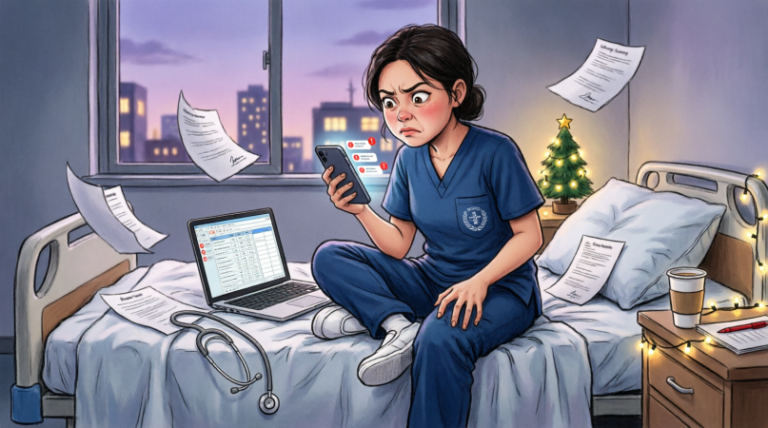
At 3:12 a.m., my phone lit up like a heart monitor.
The room around me was dark except for the blue glow of the screen and the thin stripe of streetlight leaking through my blinds. I was still wearing my scrub top—wrinkled, faintly smelling of antiseptic and someone else’s fear—because I’d stumbled home from the hospital and collapsed on the bed without even making it. Twelve hours in the ICU had left my body buzzing in that strange way exhaustion does, where you’re so tired you can’t actually sleep.
A notification hovered on my lock screen:
Family Reality Check — new messages
My thumb paused mid-air.
I didn’t recognize the group chat name. I didn’t recognize the icon either—some generic gray silhouette. For a second, I wondered if it was a work thread I’d forgotten about, or one of those spam groups that add random numbers at night.
Then I saw the list of participants. My stomach tightened.
David. Sarah. Chloe. Aunt Renee. Cousin Olivia. Mom.
My family.
Someone had accidentally added me to a chat they’d meant to keep me out of. Or they’d meant to remove me and clicked the wrong name. The kind of mistake that happens when you’re laughing too hard to double-check.
My hand hovered over the screen, and I told myself to be rational. Maybe it was an old group thread. Maybe it was a plan for a surprise gift. Maybe it was nothing.
I unlocked the phone.
The first message I saw made my blood run cold.
Sarah: Thank God she’s covering the turkey again this year. I’m not about to spend $150 on that.
David: She wants to be included. She’ll pay for anything. It’s kind of sad.
Olivia: Holiday parasite strikes again 


I stared at the words until they lost their meaning. Parasite. The word scraped across my brain like a sharp instrument.
Then I scrolled.
And the room tilted.
The conversation hadn’t started tonight. It hadn’t started last week. It had been active for three years.
Three years of messages. Screenshots. Memes. A running tally of my kindness like it was a sport. There were pictures of my Venmo payments with sobbing-laugh reactions. There were jokes about my “nurse money” and how I was “too naive to realize she’s being used.” There was a photo my mother had sent—someone tossing cash into a fire—with text over it that said: Lily’s Christmas Spirit.
Lol.
Lily. That was me.
A sound came out of my throat—small, strangled—like I’d tried to laugh and it turned into choking. My hands began to shake so hard the phone vibrated against my palm.
I scrolled up and up and up, each flick of my thumb dragging more of it into the light.
There was a betting pool on what I would pay for next.
There were jokes about how if someone mentioned “Mom’s health,” I would “open my wallet like a trained seal.” There were emojis of seals and circus tents. There were screenshots of my texts—my real texts—where I’d written things like Of course, don’t worry, I’ll send it right now and Anything you need, I’ve got you.
They had been laughing at those messages like they were punchlines.
My throat clenched so tight it hurt to breathe.
I lay there in my studio apartment—the one I could barely afford because I’d been sending money home for every holiday, birthday, and emergency my family could invent—and the darkness felt suddenly hostile, like it was watching me realize something I should have known.
My mother had called me earlier this month, crying about a medical bill. I sent her $2,500 without blinking. I ate ramen for a week afterward and told myself it was fine, because she was my mother, because I had a stable job, because family helps family.
Now, in the chat, I found the truth.
Mom: Told Lily I need help with medical costs. She sent it immediately.
Olivia: Where are you going with it?
Mom: Cabo 
My fingers went numb.
They weren’t struggling. They weren’t barely making it. They were spending my money on vacations, Botox, designer bags, and cabin rentals, while I was washing human waste off strangers and holding dying hands so those people wouldn’t be alone when the machines started screaming.
The messages blurred as tears pooled in my eyes. I wiped them away with the back of my hand, smearing salt across my cheek.
Then I saw the one from Chloe—my younger sister, the one I’d practically raised through money and worry, the one whose textbooks and food plan and sorority dues I’d covered because she couldn’t bear the idea of being “left out.”
Chloe: Lily is working another holiday shift this year. More money for us.
Sarah: You’re a demon lol.
David: Honestly she makes it too easy. She offers. That’s on her.
Chloe: Maybe I’ll finally get that Gucci bag since she’s covering Christmas dinner and gifts for Mom and Dad.
My chest tightened so hard I pressed a hand to it like I could physically hold my heart in place.
I had worked that last holiday shift because David had called me the day before, voice frantic, telling me his electricity was about to be shut off. He needed $400 immediately. I picked up overtime, sent the money, and spent my birthday alone in my apartment with a grocery store cupcake because I was too tired to go out.
Two days later, he posted photos of a brand-new gaming PC. He grinned into the camera, surrounded by monitors and neon lights, and wrote: New setup, finally!
I remember liking the post. I remember feeling happy for him. I remember telling myself he must have gotten a deal.
Now I scrolled and found the message about that, too.
Olivia: She worked her birthday so she could “help” David.
Sarah: That’s so depressing.
David: Electricity wasn’t even getting shut off lol.
Chloe: Priorities 
Fifteen laugh reactions.
My hands shook so badly I almost dropped the phone. I caught it against my stomach, breathing fast like I’d been running.
I scrolled again, because once you’ve opened the door, you can’t pretend you didn’t see inside.
They weren’t just mocking my money. They mocked my body, my dating life, my clothes, my job stories.
Olivia: Remember her Target dress at my wedding?
Sarah: What do you expect from someone who spends everything on other people?
David: Cognitive dissonance is wild. She won’t buy herself a real dress but will pay for Mom’s Botox.
Mom: Bless her little heart. She tries.
They ridiculed me for being cheap while simultaneously draining every extra dollar from me. They made fun of my “sad little apartment” while using the money that could have bought me something bigger.
Then I found the message that made me go completely still.
Two Christmases ago, I had asked my mother if I could bring someone to dinner. A guy from my hospital—James, a respiratory therapist with kind eyes and a laugh that made my shoulders unclench. We’d been seeing each other for three months. I was excited, nervous, hopeful. I wanted to introduce him like it was proof that I had a life beyond work and family obligation.
My mother told me there wasn’t room.
I believed her. I apologized for even asking. James smiled and said it was okay, but his eyes looked disappointed in a way he tried to hide.
Now I saw what my mother had told the chat that night.
Mom: Lily asked if she can bring a guy to Christmas. I told her there’s no space 
Olivia: Good. We can’t have her distracted from her duty as family ATM by a boyfriend.
David: Exactly. If she gets a life we lose a sponsor.
Sarah: Keep her lonely, keep her paying.
I stopped breathing for a second.
My stomach rolled.
James and I broke up two months later because he told me I was never available, always picking up extra shifts, always dealing with family emergencies. He said it felt like I was married to my family. He said he wanted to build a life with someone who could show up.
I cried that night and promised myself I’d do better next time.
But there hadn’t been a next time, because my family had made sure loneliness stayed close to me like a leash.
It wasn’t just manipulation. It was engineering.
They isolated me so I would keep coming back to them for connection. They kept me exhausted so I wouldn’t have the energy to question. They kept me guilty so I would keep paying.
I stared at the last messages at the bottom of the chat thread. It was still active. Someone had typed just minutes ago.
Sarah: Is Lily coming this year? I need to know if we should bother cooking or if she’ll pay for catering like last time.
David: Oh she’ll come. Where else would she go? She lives for work and being our Santa.
My hands stopped shaking.
Something cold and hard settled into my chest, replacing the tears with a strange, steady rage.
They assumed I had no life.
They assumed I was so desperate for their acceptance that I’d keep funding theirs forever.
They assumed wrong.
I sat up in bed. The room was still dark, but my mind felt painfully awake, sharpened to a single point.
I swung my feet onto the floor, stood, and walked to my tiny kitchen. The linoleum was cold under my bare feet. I poured water from the tap and drank it standing at the sink, staring at my own reflection in the window. My face looked pale, eyes swollen, hair pulled into a messy knot that still held the impression of my scrub cap.
I looked like someone who had been giving away pieces of herself for years and only now noticed the holes.
My phone buzzed again. More messages in the chat.
I didn’t read them.
I opened my laptop.
If my family wanted a reality check, I was about to deliver one with receipts.
First, I logged into every account that had my name attached to their convenience.
For years, I’d treated it like a small thing. It’s only Netflix. It’s just the phone plan. It’s easier if I handle it.
It was never small. It was a system.
The Hulu account? Mine. Netflix? Mine. Disney+ for the kids? Mine. Spotify family plan? Mine. Amazon Prime? Mine. iCloud storage for my mother’s ten thousand photos? Mine.
And the phone plan.
I stared at the Verizon dashboard and felt my stomach flip again. Six lines. Six. All under my name. Paid with my bank account.
I clicked through usage.
David averaged forty-seven gigabytes a month. Streaming, gaming, whatever else he did while complaining about financial hardship. Sarah’s phone line showed endless social media use, hours and hours of scrolling through other people’s lives while living off mine. Chloe had been making international calls—France—because her boyfriend was studying abroad. That explained the extra fees I’d been paying for months without question.
My mother had discovered TikTok at some point and was now chewing through data like it was candy. My father barely used his phone, but it was still there—one more leash in the system.
I didn’t cry again. I didn’t have room for it.
I did what I’d learned to do in the ICU when a patient started crashing: I stabilized the situation first. Panic later.
I created a new email address—one my family didn’t know. I set up a Google Voice number that none of them had ever seen. I enabled two-factor authentication on every account, using the new email and new number.
Only when I was sure they could not lock me out of my own life did I begin dismantling theirs.
The phone plan came first.
Six lines cost me around $300 a month. Three years of that was more than ten thousand dollars, and I’d treated it like background noise.
I called Verizon. A cheerful agent answered, asking how she could help.
“I need to disconnect all secondary lines immediately,” I said.
There was a pause. “We can transfer the numbers to the other users,” she offered brightly, like she was doing them a favor.
“No,” I said, voice flat. “Disconnect them. No transfer.”
Another pause, longer this time. “Ma’am, they will lose their numbers.”
I smiled, but it wasn’t happiness. It was relief.
“Good,” I said.
She tried again. “Are you sure? Sometimes family members—”
“Disconnect them,” I repeated.
The agent’s tone shifted into professional compliance. “All right,” she said. “Your primary line will remain active. Secondary lines will disconnect in forty-eight hours.”
“Thank you,” I said, and meant it.
I set a calendar reminder for the exact time the lines would die.
Then I moved on to streaming services, and for the first time in hours, something like grim amusement bubbled up in my chest.
Netflix had four profiles.
None were mine.
David had been bingeing true crime. Sarah watched reality shows about rich housewives—which felt painfully on-brand. Chloe watched romantic comedies. My mother watched British baking competitions, over and over, like she was trying to absorb kindness from a screen.
I deleted every profile but my own. I changed the password. I clicked “sign out of all devices.” A tiny thrill ran through me when the screen confirmed it.
Then Hulu. Disney+. HBO Max. Paramount+. Every one of them got the same treatment: password changed, devices removed, security tightened.
I canceled the Costco membership next. When I logged in, I discovered I could view purchase history.
My mother had been shopping there twice a week.
Not just groceries. Luxury items. A $500 outdoor furniture set. A stand mixer. Cases of premium wine. Party platters for gatherings I had never been invited to.
David had purchased auto supplies—winter tires in October.
The same month he’d told me he couldn’t afford repairs and I’d sent him $400.
I stared at the purchase list until my jaw hurt from clenching.
I terminated the membership and requested a prorated refund. Seventy-five dollars slid back into my account like a small insult.
Then iCloud.
This one was petty, and I knew it, and I enjoyed it anyway.
My mother had backed up her entire digital life on my two-terabyte plan. Photos, videos, documents, everything. I dropped the plan to the free five gigabytes and watched the system immediately start sending alerts.
Your storage is full. Your backup has failed.
She wouldn’t lose anything permanently, not right away—but she’d have to deal with it. She’d have to feel friction. She’d have to understand what it meant when something she assumed would always work suddenly didn’t.
At her age, with her limited patience for technology, she would be furious for weeks.
I imagined her calling David for help.
David realizing his phone line would be dead in forty-eight hours.
The dominoes were already falling.
The bigger cancellations came next.
I had been paying David’s auto insurance. He’d called me crying about losing coverage and I’d added his car to my policy. Two hundred dollars a month. Gone.
I called the insurance company and removed his vehicle immediately. The representative warned me there might be a gap in his coverage.
“That’s his problem,” I said, and felt something inside me unclench.
Chloe’s gym membership. A fancy club she “needed for mental health.” Seventy-five a month. Canceled.
My mother’s subscription boxes—three different ones. Beauty products, snacks, books. One hundred and twenty a month. Canceled.
Sarah’s meal kit service, because she “didn’t have time to grocery shop.” Two hundred and twenty a month. Canceled.
Dad’s roadside assistance package. Canceled.
Extended warranty for David’s TV. Canceled.
A meditation app for Chloe. Canceled.
I combed through seventeen months of credit card statements and found forty-three recurring charges tied to my family.
Some were small: $4.99 here, $12.99 there.
Some were enormous, like the $180 “grandma care fund” I’d been paying every month. I’d assumed it was for medications or assisted living.
In the chat, I learned the truth.
Grandma was fine. Subsidized senior housing, full coverage, stable.
The “care fund” was David’s yacht money.
They’d literally created a fictional old woman emergency to drain me steadily, and they’d laughed about it.
By seven in the morning, I had canceled or transferred all forty-three services.
My monthly costs dropped by $1,600 in a single night.
I stared at the number like it was a hallucination.
$1,600.
That was my rent.
That was groceries, gas, insurance, and still enough to save.
I felt queasy. Then I started laughing.
It came out wrong at first—sharp, breathless. Then tears came with it, and I was laughing and crying at the same time, sitting on my kitchen floor in yesterday’s scrubs, because the absurdity was too large for my body to hold.
I had been calling myself responsible, stable, generous.
But I had been paying for an entire ecosystem of people who called me a parasite.
The irony was so vicious it circled back into clarity.
I wiped my face, stood up, and went back to the laptop.
If I was going to burn the bridge, I was going to do it properly.
I pulled up my spreadsheets.
I had always kept records. Nurses learn documentation the same way we learn to wash our hands: as survival. If you don’t write it down, it didn’t happen. If you can’t prove it, you’re the one who gets blamed.
For years, I’d tracked everything I sent my family. Not because I planned to confront them—because I told myself maybe it would help on taxes, maybe it would count as dependent care, maybe it would matter someday.
It mattered now.
I started tallying.
Last year’s Christmas: $10,500. Cabin rental. Gas money. Food. Gifts. Decorations. “Extra help” for people who had apparently been able to afford Vegas trips and designer bags.
Thanksgiving over three years: $7,500.
Unpaid “emergency loans”: $12,500.
Chloe’s school expenses: $5,500.
David’s kids’ birthdays and holiday gifts: $3,000.
Phone costs: $3,800 over three years.
Streaming services: $6,500.
Insurance premiums and warranties: $5,000.
“Medical crises” that turned out to be vacations: $3,700.
Mom’s subscription boxes: $2,800.
Sarah’s meal kit: $2,500.
Random “crisis payments”: $1,000 here, $600 there, $200 there.
The total crawled upward like something alive.
When it hit $60,000, I stopped.
My breath caught in my throat.
Sixty thousand dollars.
I could have paid off my student loans. I could have put a down payment on a house. I could have traveled, invested, built a life beyond overtime shifts and fluorescent break rooms.
Instead, I had funded their comfort while they laughed at my loneliness.
I exported the spreadsheet into a PDF—thirty-seven pages of receipts, statements, dates, categories. A ledger of their entitlement.
Then I took screenshots of the group chat—every cruel joke, every meme, every line that revealed their system.
I didn’t do it for revenge. Not exactly.
I did it the way we take photos of bruises in the ER: so no one can later claim it wasn’t real.
By the time the sun began to lift the edge of the night, my hands had stopped shaking.
My face felt tight with dried tears, but my mind was clear.
I opened the chat.
Messages had continued while I worked.
Sarah: If we tell her Mom’s heart can’t handle hosting, she’ll cover the cabin again.
Olivia: Genius.
David: Trained seal
Chloe: Don’t push too hard, she might finally grow a spine.
Mom: She won’t.
I stared at that last line.
She won’t.
I typed my message slowly, deliberately, like I was signing a discharge order.
Hi everyone. Looks like I was accidentally added to this chat. How convenient.
I attached the PDF.
Since I’m apparently a “holiday parasite,” I’ve decided to stop feeding the hosts.
Attached is documentation of every payment I’ve made to this family over the last five years. Total: $60,000. Consider it my final Christmas gift.
All shared services and subscriptions have been canceled, effective immediately. The phone plan expires in 48 hours. I will not be attending Christmas this year or any year going forward. I will not be available for emergency loans, holiday funds, or any form of financial support. If you’re unclear why, scroll up.
You’ve spent three years making it obvious how you feel about me. I believe you now.
Merry Christmas. Don’t contact me again.
My finger hovered over send.
There was a moment—small, almost tender—where I felt the old version of myself rise up. The Lily who still hoped someone might surprise her. The Lily who still wanted her mother to be proud for the right reasons. The Lily who still thought love could be earned through sacrifice.
Then I remembered my mother’s message: She won’t.
I pressed send.
Immediately, I blocked every number.
Mother. Father. David. Sarah. Chloe. Aunt Renee. Cousin Olivia. Everyone.
Then I deleted my social media accounts. Every last one.
Instagram, Facebook, Twitter—gone.
I didn’t want to see their replies. I didn’t want their apologies or their rage or their attempts to rewrite history. Going nuclear only works if you don’t stand too close to the blast.
My phone buzzed within minutes—unknown numbers calling, voicemails piling up.
I turned the phone off.
The silence that followed felt like stepping out of a noisy room and realizing you can hear your own breathing again.
I showered, slowly. Hot water beat down on my shoulders and washed away the hospital smell. I put on clean clothes. I sat at my small kitchen table and ate toast like I was a person who had time to taste food.
Then I went back to the hospital for another shift, because my life had always been work, but now work was no longer the thing I used to avoid my family.
Now it was the thing that would build me out of the wreckage.
That year, staffing was brutal. Everyone wanted time off for the holidays, and management offered extra holiday pay—time and a half, plus bonuses for certain dates.
I used to volunteer for holiday shifts because I told myself it was better than sitting at home alone, and because my family liked to guilt me into it anyway. “You’re a nurse,” Mom would say, as if the word meant I had fewer needs. “You’re needed.”
Now I took the shifts for a different reason.
I took every available holiday shift from November 1st to January 15th.
Seventy-five days of structured exhaustion and time-and-a-half pay.
I did the math like a prayer. With overtime, I could clear around $42,000 in two and a half months.
That number used to sound like impossible wealth.
Now it sounded like reparations.
Work became a cocoon.
I worked. I slept. I worked again.
No family drama. No “emergency” phone calls. No guilt.
My coworkers noticed the change, because you can’t remove a weight from someone’s shoulders without altering how they move.
Linda, our charge nurse, watched me catch a medication error before it reached a patient. It was a subtle thing—a dosage mismatch that would have been easy to miss on a chaotic night.
I caught it because my mind wasn’t split anymore, half on my shift and half on whether David would call with another crisis.
Another day, I noticed a shift in a patient’s speech and grip strength—tiny signs that a resident brushed off as fatigue. I pushed for imaging anyway. The scan showed early stroke activity. We intervened fast.
Linda pulled me aside afterward. “Whatever’s changed with you,” she said, eyes sharp, “keep doing it. You’ve always been good, but lately you’ve been… exceptional.”
I almost laughed, because exceptional was just what I looked like when I wasn’t being bled dry.
Three weeks in, the first real test arrived.
I was restocking supplies in the ICU when I heard my name.
Not “Nurse Morrison,” not “Lily” the way my coworkers said it.
My full name, called in a tremulous voice from the unit doorway.
“Lily!”
I turned, and my stomach dropped.
Chloe stood there, small and pale, eyes red like she’d been crying for hours. She looked younger than thirty-four seconds ago I would have expected. She looked like the sister I used to buy ice cream for when she had a bad day, the girl who’d climb into my bed as a kid and whisper fears into my shoulder.
But then my mind flashed to the chat:
Maybe I’ll finally get that Gucci bag.
My face went cold.
“You can’t be here,” I said quickly, stepping toward her. The ICU doorway was a threshold with rules for a reason. People don’t wander in here. “This is a restricted area. Family consultation rooms are on the second floor.”
“Lily, please,” Chloe whispered. “Just five minutes.”
My body reacted with old training—guilt, softness, the instinct to make her feel better. But another part of me—the part that had been born at 3:12 a.m.—stayed firm.
I pressed the call button for security.
“Unauthorized individual in the ICU,” I said into the intercom, voice calm. “Please respond.”
Chloe’s eyes widened. “What are you doing?”
“Protecting my patients,” I said, because that was true. And also protecting myself.
A security guard appeared within seconds. Our ICU protocols weren’t suggestions.
“This person isn’t authorized,” I told him. “Please escort her out.”
“Lily,” Chloe’s voice cracked. “I’m your sister.”
I looked at her for a long beat.
The old Lily would have folded right there. She would have walked Chloe down to the family room, listened, softened, reassured, maybe even sent money again if Chloe cried hard enough.
Instead, I said, quietly and clearly, “I’m an only child.”
Chloe made a small sobbing sound.
The guard placed a hand lightly on her elbow. She tried to resist at first, then broke down into tears as he guided her away.
She turned her head back toward me, eyes desperate.
I didn’t follow.
I didn’t feel guilt. Not the way I expected. I felt… nothing. Like the connection had been severed somewhere deep.
Five minutes of crying didn’t repair three years of cruelty.
Ten minutes later, Linda found me in the supply closet counting IV bags with mechanical focus.
“Want to talk about it?” she asked gently.
“There’s nothing to talk about,” I said. “Someone tried to access a restricted area. Security handled it.”
Linda’s eyes held mine. “That woman said she was your sister.”
“I don’t have a sister,” I replied.
Linda studied me for a long moment, then nodded slowly. “Okay,” she said. “But if you ever do want to talk, my door’s open.”
She paused, then added, “And for what it’s worth, I’m proud of how you handled it. Professional. Appropriate. No drama.”
I nodded because my throat had tightened too much to speak.
After she left, I finished the inventory count, documented everything carefully, and returned to my patients.
Routine and structure kept me sane.
Thanksgiving came faster than I expected.
Rachel, a nurse I’d worked with for three years, had invited me to her house. I almost declined out of habit. Holidays had always belonged to my family, even when they hurt. Even when I spent them working extra shifts so I could send money home.
But Rachel’s invitation was warm and direct. “Come,” she said. “No one should be alone on Thanksgiving.”
So I went.
I arrived with an expensive bottle of wine and a homemade sweet potato casserole, and it startled me that I could afford it now. I didn’t even have to think hard about it.
Rachel’s home was cozy and chaotic in the best way. Kids ran around with foam swords. Her husband Mark told dad jokes while basting a turkey. Someone spilled cranberry juice and no one screamed. The air smelled like butter and laughter and slightly burned rolls.
Susan—Rachel’s mother—met me in the kitchen, wiping flour on her apron.
“You must be Lily,” she said, smiling like she’d known me forever. “Rachel talks about you constantly. The brilliant nurse who never complains about double shifts.”
Heat rushed to my face. Compliments still felt like a language I didn’t speak.
“That’s me,” I said, awkward.
“Well,” Susan said warmly, “we’re glad you’re here. Rachel says you’re alone for the holidays.”
There it was. The inevitable question.
I had prepared for it like I prepared for difficult patient conversations.
“My family and I aren’t in contact anymore,” I said simply. “Toxic situation. Better for everyone that I stepped away.”
Susan nodded like she understood more than I’d said. “Good for you,” she replied, calm and firm. “Too many people stay in harmful situations out of obligation. Family should make you feel loved, not used.”
The word used hit me differently from a stranger. Validation from someone with no stake in my guilt.
Dinner was loud and imperfect. The turkey was a little dry. The green beans were oversalted. The kids argued about who got the last roll. Mark pretended to be outraged at the dry turkey and everyone laughed.
Susan told a story about the year she served a turkey that was frozen in the center to twenty guests. “We ordered pizza,” she said, laughing. “Best Thanksgiving ever because it was the year we stopped pretending everything had to be perfect.”
I thought about my family’s holidays—catered meals, elaborate decor, everything polished. The image mattered more than the joy. And behind it all, they were mocking me for paying for perfection they didn’t even appreciate.
This flawed, noisy dinner with near strangers felt warmer than any holiday I’d spent with my biological family.
After dinner, Rachel and I stepped onto the back patio with mugs of coffee. The cold air made my lungs feel sharp and clean.
“Thank you for inviting me,” I said. “This was… really nice.”
“Thank you for coming,” Rachel replied. She leaned against the railing, watching her kids through the window. “I know it probably feels weird spending holidays with coworkers.”
“You’re more than a coworker,” I said, and the honesty surprised me. “You’re a friend. Maybe my only real friend.”
Rachel was quiet for a moment. Then she looked at me, serious.
“What happened with your family, Lily?” she asked gently. “You don’t have to tell me everything, but… you’ve changed so much in the past month. You’re lighter. Like you were carrying something heavy and finally put it down.”
I told her the core of it. Not every detail, but enough—the group chat, the mockery, the money.
Rachel listened without interrupting, her face shifting from disbelief to anger to grief.
“Sixty thousand,” she repeated when I finished, voice low. “Lily, that’s… that’s financial abuse.”
I flinched at the word. Abuse felt too dramatic, too extreme.
Rachel didn’t let me soften it.
“They manipulated you,” she said, firm. “They lied to you, isolated you, exploited your kindness. That’s abuse. The fact that they’re family doesn’t make it less severe. It makes it worse.”
My eyes burned with tears I refused to let fall.
“I feel stupid,” I admitted. “Like I should have seen it sooner.”
Rachel shook her head. “Con artists target smart people,” she said fiercely, “because smart people assume they’re too smart to be conned. You’re not stupid. You’re kind. They weaponized your kindness. That’s on them.”
Inside, Rachel’s daughter complained her phone was ancient. Rachel told her she could get a new one if she saved her allowance. Nobody expected someone else to fund their wants.
It was such a normal, healthy exchange that my chest ached.
On December 24th, I worked a twelve-hour shift in the ICU.
Around three in the afternoon, a woman approached the nurse’s station looking disoriented, clutching her purse like a lifeline.
“I’m trying to find my daughter,” she said. “She’s a nurse here. Lily Green.”
My breath caught.
Even with the hair styled differently, even with her face thinner, I recognized my mother immediately. The desperation in her eyes was unmistakable—my mother had always been good at desperate when it got her what she wanted.
“I’m sorry,” I said quietly. “There’s no one here by that name.”
It wasn’t exactly a lie.
Two months earlier, I’d filed paperwork to change my name. The legal process was still in motion, but in every way that mattered, I had stopped being Lily Morrison. Morrison was my father’s name, my family’s name, the name attached to checks and obligations.
I had chosen my grandmother’s maiden name: Green.
It felt like reclaiming something gentler. Something older than the rot.
“Please,” my mother pleaded, stepping closer. “I know she works here. I need to talk to her.”
I didn’t move.
Behind her, I saw patients’ families waiting on chairs, eyes hollow with fear. The ICU wasn’t a stage for my mother’s performance.
Security arrived before I had to do anything. Apparently she’d been making a disturbance in the lobby for an hour, insisting she had a right to see “her daughter.”
They escorted her out. She shouted my old name as she went, voice raw.
I kept my hands steady and finished my shift.
The next week blurred into work and sleep.
On January 3rd, the hospital in Portland offered me the position I’d once turned down.
Head nurse, cardiac unit.
Forty thousand dollars more per year.
Signing bonus.
Relocation assistance.
The offer sat on my screen like a door flung open.
A year earlier, I’d turned it down because my mother cried, “Who will help us if you leave?” and I believed that was love.
Now I understood it was dependence.
I accepted immediately.
By mid-January, my name change became official.
Lily Morrison was legally dead.
Lily Green was born.
The day I picked up my new driver’s license, my hands trembled—not from fear, but from the weight of it. Proof. Documentation. A new identity stamped into plastic.
I felt like I’d been reborn, and for the first time, the paperwork of my life felt like freedom instead of burden.
Portland was rain and pine and space.
My new apartment was double the size of my old studio. It had a gym downstairs and a rooftop garden. I bought real furniture—not curb finds or Facebook Marketplace bargains. I bought a couch that didn’t sag. I bought a bed frame. I bought art for my walls because I wanted color around me.
At the shelter, I adopted a gray tabby cat with a crooked ear and wary eyes. The volunteer said he’d been found in a burned-out building.
I named him Phoenix.
The first night he curled up beside me on the couch, purring like a small engine, I put my hand on his fur and felt something inside me soften.
I was building a home that didn’t require anyone’s permission.
My old email account—my old life—continued receiving messages. I set up a folder called Dead to Me that auto-archived everything without notifying me.
I didn’t open it for months.
Then curiosity got the better of me on a rainy night in March. Phoenix was asleep on my lap, the apartment quiet, my mind restless.
I clicked.
My mother’s emails were long guilt trips drenched in obligation. She wrote about “family values” and “how cruel you’ve become.” She wrote as if the group chat didn’t exist, as if my boundaries were a betrayal.
Sarah sent a two-sentence apology that blamed postpartum depression from four years ago. David insisted I’d “misread the context” and that the chat was “just jokes.” Couldn’t I take a joke?
Olivia’s message was icy. She said I’d embarrassed the family by airing private matters.
Chloe’s email was different.
Short. Honest. No excuses.
You paid for my education and I called you stupid. You’re the smartest person I know and I’m the idiot.
I don’t deserve forgiveness, but I need you to know I’m sorry. I started paying you back. It’ll take years, but I’m putting $150 into a savings account every month in your name.
If you never want to speak to me again, I understand. But I’m sorry. Really truly sorry.
I stared at her words for a long time.
I didn’t reply.
But I didn’t delete it either.
A small seed of something—maybe not forgiveness yet, but possibility—settled into the back of my mind.
Then I saw my father’s email.
He had never posted much in the group chat. His name was there, but he rarely spoke. In my childhood, he wasn’t cruel the way my mother could be; he was absent. He let things happen by not stopping them.
His email was longer than I expected.
Lily, he wrote. I didn’t know about the chat until you sent the screenshots. Your mother showed me her phone and I saw what they’d been saying. What I allowed by staying silent, by not paying attention.
You deserved better from all of us, but especially from me. I should have protected you.
I filed for divorce last week. I’m living in an apartment now. I started therapy. I’m trying to understand how I enabled this.
I’m not asking for forgiveness or reconciliation. I just wanted you to know I see what I failed to do and I’m trying to become someone who wouldn’t fail you again, even if you never let me be part of your life.
I love you. I’m proud of you. I’m sorry.
I read the email three times.
Then I closed my laptop.
Some bridges burn because you set them on fire. Some bridges burn because they were built on rot and someone finally lit a match.
Spring arrived in Portland with cherry blossoms and soft rain.
I started dating a man named Ryan—yes, another Ryan in a world full of them—who taught middle school and laughed with his whole face. He admired my dedication instead of trying to exploit it. When we went out, he always paid his share without making it a performance. He never asked me for favors that cost me more than they cost him.
We took a cooking class together and made pasta that came out lumpy and perfect. We laughed until our cheeks hurt. Nobody asked me to cover a “family emergency.” Nobody weaponized my empathy. It felt like learning to breathe with different lungs.
Rachel invited me to her family’s Easter celebration, and I went. Susan hugged me when she saw me, like I belonged.
At dinner, Susan asked casually, “How’s your family doing?” and I surprised myself by answering with the truth.
“I don’t have one anymore,” I said.
Susan didn’t flinch. She walked around the table and hugged me, tight and motherly.
“You do now, honey,” she whispered.
I went into her bathroom afterward and cried for ten minutes, then came out and ate three servings of ham like a person allowed to be messy.
My bank account grew.
In April, I paid off my student loans in one lump sum—$28,000. When the screen showed a zero balance, my chest felt so light I thought I might float. I sat on my couch and stared at it until Phoenix nudged my hand like he was reminding me to stay in the present.
In May, a cashier’s check arrived with a note from Chloe.
First payment. Many more to come. Your address was on the court documents. I’m not stalking you, I promise. I just want to make this right.
I deposited the check. I sent one text to the number she included—short, neutral.
Received. Thank you.
She replied instantly.
Thank you for not blocking me. I’m trying.
In June, my mother found my address.
I came home from work to see her waiting outside my building like a ghost of my old life. She looked older, smaller. The woman who once made chocolate chip pancakes on Sundays and patched my skinned knees stared at me with desperation like she couldn’t understand why the machine had stopped paying out.
“Lily,” she said, rushing forward.
I didn’t move.
“You need to leave,” I said calmly, swiping my key fob to enter.
“Please,” she whispered. “I’m your mother.”
“That’s not my name anymore,” I said.
Her eyes widened at the boundary like it was a weapon.
“You’re my daughter,” she insisted, voice trembling.
For the first time in six months, I stopped completely. I turned and looked at her, really looked. Her face was familiar, but something about it felt wrong now—like recognizing a person from a dream after you’ve woken up.
“Your daughter died,” I said softly, “when she realized her family saw her as a wallet with legs.”
My mother flinched as if I’d slapped her.
“You have sixty seconds to leave,” I continued, voice steady, “before I call the police.”
She left in forty-five.
I didn’t feel victorious. I didn’t feel vindicated.
I felt tired, in a deep way that had nothing to do with shift work.
That night, I wrote my father a simple email.
Acknowledged. Not ready to talk. Maybe someday. Focus on yourself.
He replied within minutes.
That’s more than I deserve. Thank you.
Summer in Portland was golden. Ryan and I hiked near Mount Hood. I took a vacation to Greece—a dream I’d shelved for years because my family always needed something right when I saved enough.
I posted photos on a new, private Instagram account with thirty followers—people I’d met in the last year, people who asked me about sunsets and food and my cat, not my bank account.
No one asked for money.
No one needed me for anything other than my presence.
In August, Chloe sent a second check with a longer note.
I got a promotion. Sending $450 this month. I told David and Sarah what I’m doing and they think I’m stupid for giving you money you don’t even need now. That’s how I know it’s the right thing to do. You deserved better. I’m trying to be better.
I replied:
Proud of your promotion. Use half that money for yourself. I mean it.
An hour later, she texted back:
Only if you promise to let me take you to dinner if you’re ever back east. No agenda. Just sisters eating overpriced pasta.
I didn’t promise.
But I didn’t say no.
In September, I got a phoenix tattoo on my shoulder blade—wings rising out of flame. The artist asked what it meant.
“Rebirth,” I said simply.
She smiled. “Those are the best kind.”
October arrived with falling leaves and an unexpected package.
Inside was a hand-knit scarf in forest green—my favorite color—and a note from my father.
Your grandmother taught me to knit before she died. I’m not good at it yet, but I’m trying. Stay warm. No response needed.
The scarf was uneven. A few stitches dropped. It was imperfect and earnest in a way my family had never allowed themselves to be.
I wore it all fall.
On the anniversary of the night everything changed, I came home from a night shift and found another check from Chloe on my counter—she’d been steady, never missing a month.
My father emailed photos of himself volunteering at a shelter, handing out meals to homeless veterans.
Trying to be useful to people who actually need help, he wrote. Trying to be someone you could be proud of someday.
I didn’t reply.
Not yet.
Christmas approached again, and for the first time in my life, I had options.
Ryan asked if I wanted to spend the holidays with his family in Seattle. Rachel invited me to hers again.
A year ago, my family assumed I would always show up because I had nowhere else to go.
Now I had people who wanted me—not my money, not my labor, just me.
I chose Rachel’s.
Susan’s tenderness reminded me what family could feel like when it wasn’t transactional.
On Christmas Eve, I worked a half shift and then went to Rachel’s house for dinner.
Her kids staged a chaotic nativity scene with the dog playing a confused sheep. Mark made bad jokes. Susan showed me photos of her rescue cats and asked about Phoenix like he was a grandchild.
Nobody asked for money.
Nobody asked what I was giving them.
Nobody made my worth conditional.
After dinner, I checked my email and found a message from Chloe.
Merry Christmas. I’m not expecting a response. Just wanted you to know I think about you every day and I’m still sorry. Still paying back. Still trying. Hope you’re happy wherever you are.
I stared at it for a long time.
Then I typed back:
Merry Christmas. I’m happy. Keep being better. That’s enough.
Her response came instantly.
You responded. Best Christmas gift ever. Love you, sis.
The words sat on the screen like something fragile.
Love you, sis.
Part of me wanted to type it back.
Part of me wasn’t ready.
So I wrote:
Talk next year. Maybe. Thank you.
Maybe wasn’t forgiveness.
But maybe was a door cracked open.
I closed the laptop and returned to the living room where Rachel’s kid was trying to teach the dog to wear a Santa hat. Ryan poured champagne and kissed my forehead. Someone started a board game that turned into happy squabbling and laughter.
Joy without a transaction.
Love without calculation.
This was how holidays were supposed to feel.
A year ago, I was the “holiday parasite,” unknowingly feeding a family that saw me as prey.
Now I was just Lily.
Free.
Whole.
The best revenge, I learned, wasn’t destruction.
It was reconstruction.
On New Year’s Eve, my father sent another message.
I know you’re not ready. You might never forgive me, and I’ve accepted that. But I wanted you to know I’m divorcing your mother. I’m in therapy. I cut off everyone who was in that chat. I’m living differently—not for you, for me. So I can look at myself in the mirror.
You deserved a father who protected you. I’m becoming that man, even if it’s too late.
Happy New Year, sweetheart.
I stared at the message for a long time.
Then, for reasons I couldn’t fully explain, I saved it.
I didn’t reply. Not yet.
But I saved it like evidence that sometimes people can change if they finally look at what they’ve done.
As midnight approached, Ryan pulled me close and asked, “What do you want for the new year?”
I looked around at my life—the apartment filled with warmth, the cat curled on a chair, friends laughing in the next room, a phone that didn’t buzz with invented emergencies.
“More of this,” I whispered. “More peace. More joy. More people who love me for me, not for what I can give them.”
Ryan’s eyes softened. “That’s not too much to ask,” he said.
And for the first time in my life, I actually believed him.
THE END!