The internet has seen cruel family stories before.
But this one hit people like a punch directly to the chest.
A grieving mother.
Three coffins.
And parents who chose a birthday dinner instead of saying goodbye to their dead grandchildren.
Millions of readers now say the story exposed something darker hiding inside modern families.
Not hatred.
Not violence.
Something colder.
Selective love.
The story exploded online after a legal settlement connected to a deadly Interstate 95 crash became public.
But the money was never the part people could stop talking about.
It was the phone call.
The one sentence.
The sentence readers say they will never forget.
“Today is your sister’s birthday. We can’t come.”
That line spread across social media within hours.
People reposted it with disbelief, anger, and personal confessions about emotional neglect inside their own homes.
Thousands admitted the story forced them to confront painful truths they had spent years minimizing.
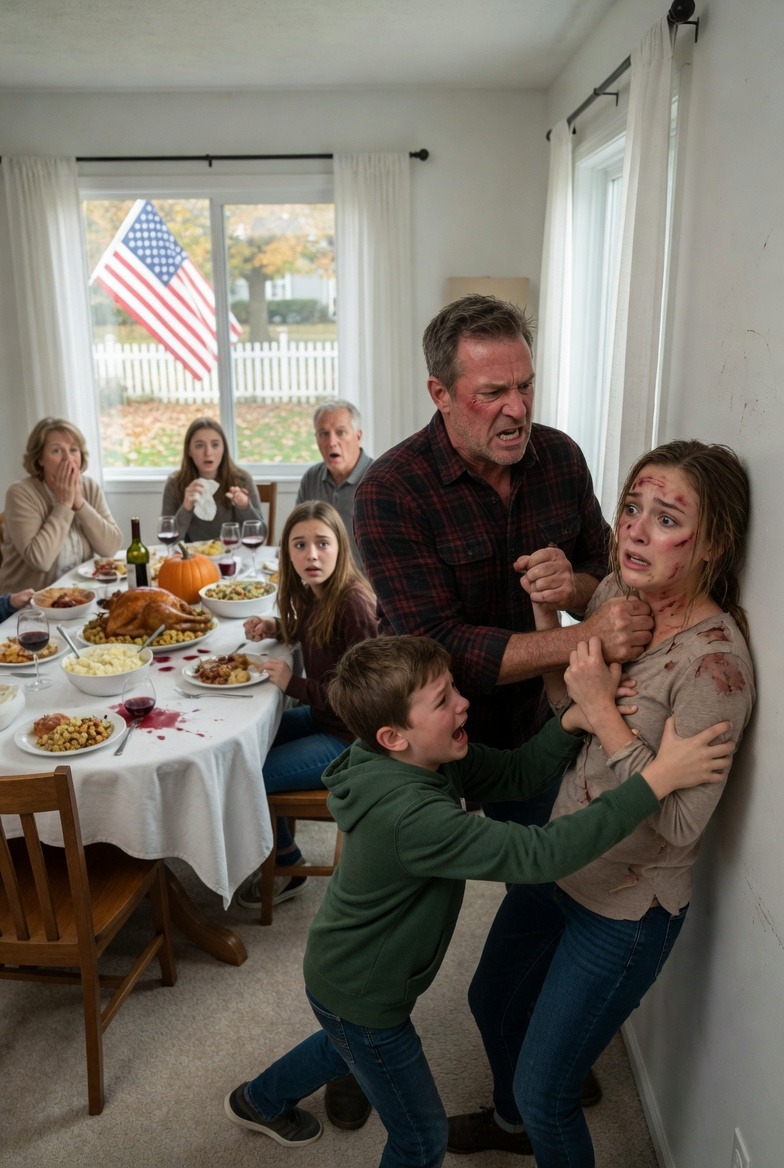
Many said they suddenly realized they were never the favorite child either.
The woman at the center of the storm is thirty-four-year-old Claire Miller of Virginia.
Six months ago, she lost her husband Ethan and their two children in a catastrophic highway collision outside Richmond.
According to public reports, a truck driver crossed the median after allegedly ignoring mandatory rest periods.
Claire survived only because she was not inside the vehicle.
That fact alone shattered readers emotionally.
But what happened afterward created nationwide outrage.
From a hospital chapel, with ash reportedly still covering her hands, Claire called her parents.
She expected comfort.
Or at least presence.
Instead, she heard music in the background.
Laughter.
Birthday candles.
Party noise.
Her younger sister Melissa was celebrating her birthday dinner that same evening.
Claire’s father listened calmly as she explained her husband and children were dead.
Then he asked one question.
“When is the funeral?”
Claire told him Friday.
There was silence for several seconds.
Then came the response now dominating every social platform discussing family trauma.
“Friday is your sister’s birthday dinner. The reservation has been booked for weeks.”
Readers online described physically stopping while reading the story.
Some said they cried.
Others admitted they became furious immediately.
One viral comment received more than two million views after saying:
“Imagine choosing appetizers over your dead grandchildren.”
Another wrote:
“This wasn’t neglect anymore. This was emotional abandonment wearing polite clothing.”
Psychologists discussing the story online say the public reaction reveals a growing conversation around conditional parenting.
Specifically, families where one child receives endless emotional protection while another becomes emotionally disposable.
The internet quickly began labeling Claire “the invisible daughter.”
A phrase that resonated far beyond this single tragedy.
For many readers, the funeral became symbolic.
Not just a burial for three lives.
But the burial of Claire’s place inside her own family.
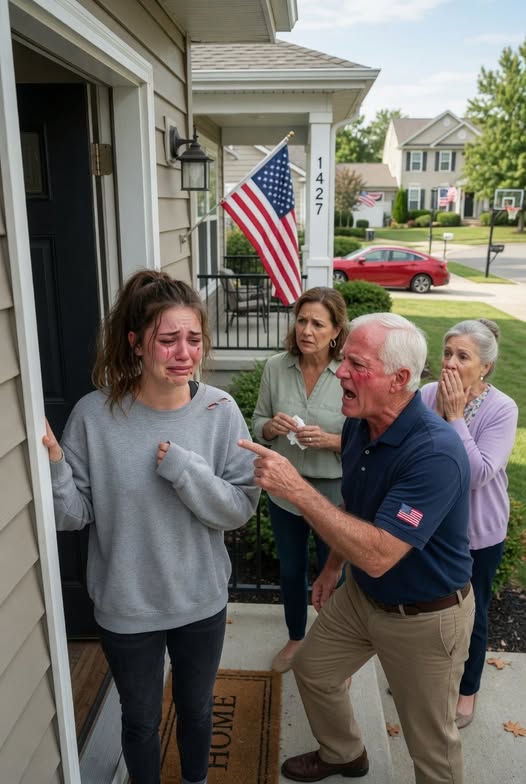
According to the story now circulating online, Claire stood between three coffins with almost no biological relatives present.
Her husband’s parents reportedly held her upright throughout the service.
Meanwhile, her own side of the church remained mostly empty.
No parents.
No sister.
No cousins.
Only one aunt reportedly attended after learning about the deaths from a neighbor instead of Claire’s family directly.
That detail fueled another wave of anger online.
People began asking the same question repeatedly.
How does a family become this emotionally detached?
Some blamed narcissistic parenting dynamics.
Others blamed favoritism normalized over decades.
But nearly everyone agreed on one thing.
The birthday excuse itself revealed years of emotional imbalance long before the tragedy occurred.
Then came the text message that many readers now describe as the cruelest moment in the story.
Three days after the funeral, Claire’s mother reportedly sent her a short message.
“Hope you’re managing. Melissa felt hurt you didn’t call her on her birthday.”
That sentence detonated online.
Screenshots of the quote flooded TikTok, Facebook, Reddit, and Instagram discussions about toxic family systems.
Women especially began sharing eerily similar experiences.
Stories about siblings constantly prioritized over grief, illness, weddings, pregnancies, and personal milestones.
One woman wrote:
“My brother ruined every important moment of my life and my parents always defended him because keeping him happy mattered more than loving me.”
Another said:
“I spent years thinking I was dramatic until I read this story.”
For six months, Claire reportedly stopped speaking to her family almost entirely.
There were no emotional apologies.
No emergency visits.
No visible remorse.
According to the account now circulating online, her parents continued sending casual holiday photos and invitations to family events.
As if the funeral controversy had been a misunderstanding instead of devastation.
Then January arrived.
And everything changed overnight.
A public settlement connected to the crash reportedly awarded Claire nearly nineteen million dollars.
At the same time, she announced the creation of a child safety foundation honoring Ethan, Lily, and Noah.
The headline spread rapidly across local and national outlets.
But one hidden detail inside the legal filings caused the real explosion.
Claire had legally removed her entire biological family from every aspect of her life.
Completely.
Emergency contacts.
Medical authority.
Inheritance rights.
Property access.
Everything was gone.
The house she shared with Ethan had reportedly been placed into a protected trust connected only to their children’s memory foundation.
Her husband’s parents and Aunt Ruth were placed on the board instead.
But the most devastating detail was reportedly written plainly inside foundation background documents.
Claire explained exactly why her biological relatives had been excluded.
“My parents refused to attend the funeral of my husband and two minor children because it conflicted with my sister’s birthday dinner.”
Readers say that sentence transformed the entire story from tragedy into public reckoning.
Because suddenly there was no ambiguity left.
No misunderstanding.
No exaggeration.
No emotional overreaction.
Just a documented decision.
The backlash against Claire’s parents intensified immediately after the documents surfaced publicly.
Within hours, social media users reportedly identified patterns many recognized from their own childhoods.
The “golden child” dynamic became one of the most discussed topics connected to the story.
Melissa quickly became the internet’s symbol for protected favoritism.
Some defended her, arguing parents were responsible for the decision.
Others disagreed violently.
Critics pointed out that Melissa never reportedly attended the funeral either.
Nor did she publicly apologize afterward.
Instead, according to the account, she later confronted Claire saying:
“You’re really going to punish everyone over one bad day?”
That quote triggered another wave of outrage.
Because readers believed it revealed something deeply unsettling.
To Claire’s family, the deaths of Ethan, Lily, and Noah had become “one bad day.”
A temporary inconvenience.
An uncomfortable scheduling conflict.
Meanwhile, Claire was still living inside the ruins of that day permanently.
Experts discussing the case online say emotionally neglectful families often minimize catastrophic pain when acknowledging it would threaten the family’s self-image.
That analysis spread rapidly through discussion forums.
One therapist wrote:
“Families like this survive through denial. If they fully acknowledged the cruelty, the entire structure would collapse.”
That sentence itself became widely reposted.
Then came the confrontation outside Claire’s home.
The moment many readers described as cinematic.
Her father reportedly arrived pounding on the door after the settlement became public.
Not immediately after the deaths.
Not after the funeral.
Not during the months of silence.
After the money.
That detail changed public perception even further.
Because many readers concluded the panic was never about losing Claire emotionally.
It was about losing access.
According to the story, Claire watched through a security camera while her parents demanded she open the door.
Her sister stood beside them wearing sunglasses under a gray winter sky.
Her mother reportedly said:
“We need to talk as a family.”
But by then, the word “family” no longer meant safety to Claire.
For millions reading online, it represented obligation without compassion.
The most quoted response from Claire came moments later.
And readers instantly turned it into viral captions, reaction videos, and stitched monologues.
“I’m not punishing anyone. I’m just done pretending you didn’t choose.”
That line struck people for one reason above all others.
Because it reframed estrangement completely.
Claire was not portrayed as revengeful anymore.
She was portrayed as awake.
Across social media, users began debating a controversial question.
At what point does forgiveness become self-destruction?
Some argued family bonds should survive almost anything.
Others fiercely disagreed.
One viral post stated:
“DNA explains relatives. It does not guarantee love.”
Another read:
“People tell abused children to forgive because it makes everyone else comfortable.”
The story also reignited fierce discussions about grief hierarchy inside families.
Why are some losses treated as sacred while others are quietly dismissed?
Many readers admitted the article triggered memories they had buried for years.
Missed funerals.
Ignored emergencies.
Birthdays prioritized over breakdowns.
The emotional reaction became so intense that some users called the story “the final boss of family betrayal.”
That phrase alone gained millions of views within two days.
Meanwhile, others warned against turning personal trauma into entertainment.
They argued internet audiences often consume pain too aggressively without considering the surviving victims involved.
Still, the debate only intensified visibility.
Every repost created another avalanche of discussion.
Family estrangement forums reportedly saw spikes in activity after the story spread widely online.
Many users said Claire’s decision gave them validation they never received elsewhere.
One commenter wrote:
“I kept waiting for someone to tell me my pain counted. This story did.”
Another said:
“The cruelest families are often the most polite in public.”
That observation resonated deeply with readers who described emotionally performative relatives.
Families obsessed with appearances while privately withholding empathy.
Public fascination also grew around Aunt Ruth, the only biological relative who reportedly stood beside Claire consistently.
Readers called her “proof that loyalty is a choice.”
Meanwhile, Ethan’s parents became symbols of unconditional support during unbearable grief.
People repeatedly highlighted how they physically held Claire upright during the funeral.
That image stayed with readers.
One woman standing between three coffins while the people who raised her stayed home celebrating candles and dinner reservations.
Even weeks after the story first surfaced, debates continue exploding across every platform.
Some people insist reconciliation remains possible.
Others believe permanent separation is healthier.
But nearly everyone agrees the story revealed something terrifyingly common.
The existence of families where love is distributed based on convenience, image, or favoritism instead of compassion.
The phrase “one bad day” continues appearing repeatedly online because readers believe it exposes how emotionally privileged people often minimize irreversible pain.
Especially when the suffering belongs to someone else.
Claire’s silence during those six months also became a major point of discussion.
Many readers called it the most realistic part of the entire story.
Not screaming.
Not revenge.
Not dramatic confrontations.
Just silence.
Withdrawal.
Documentation.
Boundaries.
Then legal permanence.
Some users described her actions as cold.
Others called them necessary survival.
But the internet overwhelmingly rallied behind one conclusion.
Claire did not destroy her family.
She finally stopped protecting the illusion of one.
The most unsettling part for many readers is imagining the moment her parents saw the headline publicly.
Not mourning.
Not regret.
Panic.
Because suddenly the daughter they ignored possessed something they could no longer control.
Her voice.
And once the internet heard it, the story stopped belonging only to that family.
It became a mirror reflecting millions of private wounds people rarely discuss publicly.
That may explain why the story continues spreading so aggressively online.
Not because audiences enjoy tragedy.
But because too many people recognized themselves inside it.
The overlooked child.
The minimized sibling.
The family scapegoat.
The relative expected to endure everything quietly to preserve peace for everyone else.
For those readers, Claire’s final words outside the door became more than dialogue.
They became permission.
Permission to stop begging for love from people already making their choice clear.
And perhaps that is why this story refuses to disappear from the internet.
Because beneath the outrage, beneath the settlement, beneath the funeral controversy itself, exists one brutal question terrifying millions of people reading it.
If tragedy exposed the truth about their own family tomorrow…
Would anyone finally realize they were never chosen either?