“Robert and I had talked about taking a cruise before he got sick.”
The memory brought a pang of sadness, but it was gentle now, worn smooth by time.
“We never made the trip, but the passport is still valid.”
“But mom, you’ve never traveled internationally.”
“You’ve barely left Colorado since dad died.”
“Then it’s time for a change, don’t you think?”
I could practically hear Brandon’s mind racing through the implications.
His mother, the woman he’d dismissed as a burden, was suddenly making independent plans to travel internationally with a billionaire.
The power dynamics of our relationship were shifting faster than he could process.
“What about your house?”
“Your responsibilities here?”
“What responsibilities?”
The question came out sharper than I’d intended.
“Brandon, what exactly do you think I’m responsible for that would prevent me from traveling?”
Another long silence because we both knew the answer.
Nothing.
I had no job, no dependence, no commitments that couldn’t be handled with a phone call or postponed for a few weeks.
My life had become so small that it could fit into a carry-on bag.
“I just think maybe you’re moving too fast with this relationship,” Brandon said finally.
“You’ve known him for what, 2 days?”
“I’ve known him for 50 years,” I corrected.
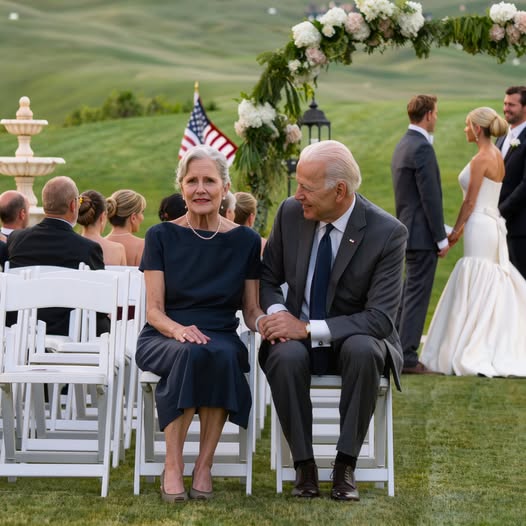
“We’re just picking up where we left off.”
“Mom, please be reasonable.”
“You can’t just run off to Italy with some man.”
“Some man?”
Theo raised an eyebrow at that, clearly amused.
“I can’t.”
I interrupted Brandon’s protests.
“Why not?”
“I’m 68 years old, Brandon.”
“Not 8.”
“I don’t need your permission to live my life.”
“That’s not what I meant.”
“It’s exactly what you meant.”
“You’ve spent the last 3 years treating me like a child who can’t be trusted to make her own decisions.”
“Well, guess what?”
“I’m making them anyway.”
I hung up before he could respond and immediately turned off the phone.
“That felt good,” I admitted to Theo.
“I imagine it did.”
“though I should probably mention that I don’t actually have a house in Tuscanyany.”
I stared at him for a moment, then burst into laughter.
“You don’t?”
“Not yet,” he said with a grin.
“But I can have one by next week if you’re interested.”
The casual way he said it, like buying international real estate was no more complicated than picking up groceries, should have been intimidating.
Instead, it was thrilling.
“Theo,”
I said slowly.
“What exactly are we doing here?”
“We’re living,” he said simply.
“For the first time in 50 years, we’re actually living instead of just existing.”
My phone, despite being turned off, somehow managed to ring.
Theo looked at it with amusement.
“I think your son may have some additional thoughts to share.”
“Let him think,” I said, leaving the phone silent.
“It’ll be good for him.”
But even as I said it, I knew that Brandon’s panic was just the beginning.
The real consequences of my newfound independence were still to come.
Monday morning brought an unexpected visitor to my front door.
I opened it to find a woman in her 40s with perfectly styled blonde hair and the kind of aggressive confidence that comes from being born into money and privilege.
“Mrs. Patterson. I’m Catherine Ashworth, Vivien’s mother.”
Of course she was.
The family resemblance was unmistakable, from the calculating blue eyes to the way she held herself like someone accustomed to getting her way through sheer force of personality.
“Mrs. Ashworth,” I said politely, not inviting her in.
“This is unexpected.”
“May I come in?”
“I think we need to have a conversation.”
The phrasing wasn’t quite a question, more of an assumption that I would naturally comply with her wishes.
It was the same tone Viven used when she wanted something, that particular blend of entitlement and barely concealed threat that wealthy people seemed to learn in the cradle.
“Of course,” I said, stepping aside.
After all, I was curious to see what the matriarch of the Ashworth family wanted badly enough to show up unannounced at my modest suburban home.
She swept into my living room like she was conducting an inspection.
Her gaze cataloging everything from my furniture to my decorations with the kind of professional assessment that real estate agents perfected.
I could practically see her calculating the value of everything in sight and finding it disappointingly low.
“Coffee?”
I offered more from politeness than genuine hospitality.
“No thank you.”
“This shouldn’t take long.”
She settled into my best chair like she was doing me a favor by gracing it with her presence.
“I’ll get straight to the point, Mrs. Patterson.”
“Your relationship with Theodore Blackwood is causing problems for my family.”
“Is it?”
I settled across from her, genuinely curious about where this conversation was heading.
“How interesting.”
“Don’t play koi with me,” Catherine snapped, her mask of politeness slipping.
“You know exactly what you’re doing.”
“My husband’s business is being threatened because you’ve decided to use your friendship with Mr. Blackwood as some kind of revenge against Viven.”
“Revenge is such a dramatic word,” I said mildly.
“I prefer to think of it as natural consequences.”
“This is extortion.”
“No, this is business.”
“Theodore purchased a building, which is his right as a private citizen.”
“The fact that your husband’s company happens to be a tenant in that building is simply unfortunate timing.”
Catherine’s eyes narrowed.
“We both know this isn’t about timing.”
“This is about Viven’s comment at the wedding.”
“Oh, you heard about that?”
I asked with false surprise.
“How embarrassing for your family.”
“Look,” Catherine said, leaning forward with the intensity of someone playing their final card.
“I don’t know what your game is here, but I’m prepared to make this worth your while.”
Now, this was interesting.
Worth my while.
“How?”
She reached into her designer handbag and pulled out what appeared to be a check.
“$50,000.”
“All you have to do is convince your boyfriend to honor the existing lease with Ashworth Properties.”
I stared at the check, genuinely shocked.
Not by the amount, but by the sheer audacity of the gesture.
“Mrs. Ashworth, are you attempting to bribe me?”
“I’m offering you a mutually beneficial arrangement,” she corrected smoothly.
“You help us maintain our business relationship with Mr. Blackwood, and you receive compensation for your assistance.”
“Compensation?”
I rolled the word around in my mouth like a foreign object.
“How much did Vivian tell you about that conversation at the wedding?”
“Enough to know that money is a concern for you,” and you assumed that meant I was for sale.
Catherine’s smile was razor sharp.
“Mrs. Patterson, everyone is for sale.”
“It’s just a matter of finding the right price.”
I stood up and walked to the window, looking out at the garden Robert and I had planted together 15 years ago.
The roses were blooming beautifully this year, their crimson petals bright against the morning sun.
It was a simple garden in a simple neighborhood, nothing like the elaborate landscapes I’d seen at the Ashworth estate.
But it was mine, earned through 40 years of teaching and loving and building a life with a good man.
“You know what’s funny, Mrs. Ashworth?”
I said without turning around.
“Yesterday I might have been tempted by your offer.”
“Not because I need the money, but because I’m so accustomed to being dismissed and undervalued that $50,000 would have felt like validation.”
And today,
Catherine’s voice had lost some of its confidence.
I turned back to face her, and whatever she saw in my expression made her shift uncomfortably in her chair.
“Today, I know what I’m actually worth, and it’s considerably more than $50,000.”
I walked over to where she sat and picked up the check, looking at it with the kind of detached interest I might show a museum artifact.
“This is insulting, Mrs. Ashworth, not just the amount, though that’s laughably inadequate.”
“The insult is in the assumption that my relationship with Theodore is some kind of performance that can be purchased and managed.”
I tore the check in half, then in half again, letting the pieces flutter to the coffee table between us.
“My relationship with Theodore is none of your business.”
“The lease situation is none of my business.”
“If your husband wants to negotiate with Theodore, he’s perfectly capable of picking up the phone and calling him directly.”
Catherine’s composure cracked completely.
“You’re making a mistake, Mrs. Patterson.”
“The Ashworth family has considerable influence in this city.”
“We can make things very difficult for people who cross us.”
“Are you threatening me?”
I asked with genuine curiosity.
“I’m explaining reality.”
I laughed, surprising both of us with how genuine it sounded.
“Mrs. Ashworth, 3 days ago, your threats might have scared me.”
“Today, they’re just amusing.”
“You see, I’ve spent the last 50 years being afraid of disappointing people, afraid of not being good enough, afraid of taking up too much space in the world.”
I moved closer to where she sat and she actually leaned back in the chair.
“But yesterday, I sat in a restaurant with a man who values me for exactly who I am.”
“A man who has spent 50 years trying to find me because he believed I was worth finding.”
“Do you really think your social influence frightens me now?”
Catherine stood up abruptly, her face flushed with anger and embarrassment.
“This isn’t over.”
“Yes, it is,” I said calmly.
“It’s completely over.”
“You came here to buy my compliance, and instead you’ve shown me exactly what kind of people you really are.”
“Thank you for that clarity.”
She stormed toward the door, then stopped and turned back with one final attempt at intimidation.
“Your son is married to my daughter, Mrs. Patterson.”
“That makes us family.”
“You might want to consider what’s best for Brandon’s future.”
“I’ve spent 35 years considering what’s best for Brandon’s future,” I replied.
“It’s time he started considering what’s best for mine.”
After she left, I sat in my quiet living room and realized that something fundamental had shifted.
For the first time in decades, I wasn’t afraid of the consequences of standing up for myself.
My phone rang.
Theodore’s name appeared on the caller ID, and I answered with a smile in my voice.
“Good morning, handsome.”
“Good morning, beautiful.”
“How’s your day starting?”
“Interestingly,” I said, looking at the torn checkpieces on my coffee table.
“I just had the most enlightening conversation with Catherine Ashworth.”
“Did you?”
“How delightful.”
“I hope you were appropriately impressed by her charm and subtlety.”
“Deeply impressed.”
“She offered me $50,000 to convince you to honor the lease with her husband’s company.”
The silence on the other end of the line stretched long enough that I wondered if we’d been disconnected.
“50,000?”
Theodore finally said, his voice carefully controlled.
“I told her it was insulting because the amount was too low.”
“Because the assumption was offensive.”
I paused, enjoying the moment.
“Though you’re right, the amount was also ridiculously inadequate.”
Theodore’s laughter was rich and warm.
“Elellanar, my darling, you continued to surprise me.”
“What did you tell her?”
“I told her that my relationship with you wasn’t for sale at any price.”
“Then I tore up her check.”
“You tore up $50,000?”
“It felt wonderful,” I admitted.
“Very therapeutic.”
“In that case,” Theodore said, his voice full of mischief, “I have a proposal for you.”
“How would you like to help me send a message to the Ashworth family about the proper way to treat people they consider beneath them?”
“What did you have in mind?”
“Something spectacular, something that will make $50,000 look like pocket change.”
The anticipation in his voice was infectious.
“Tell me, not over the phone.”
“Can you meet me for lunch?”
“I have something to show you.”
An hour later, I found myself in the backseat of Theodore’s Mercedes, heading toward the downtown financial district.
We pulled up in front of a sleek glass building that I recognized as one of Denver’s most prestigious commercial addresses.
“Where are we going?”
I asked as Theodore helped me out of the car.
“To meet with my attorney,” he said, his smile mysterious.
“We have some papers to sign.”
“What kind of papers?”
the kind that are going to make the Ashworth family very, very sorry they ever heard the name Eleanor Patterson.
As we walked into the building’s marble lobby, I felt a thrill of anticipation mixed with something I hadn’t experienced in years.
The intoxicating sense of having real power.
Whatever Theodore had planned, I was ready for it.
Theodore’s attorney turned out to be a sharpeyed woman in her 50s who clearly knew her way around highstakes financial maneuvering.
Margaret Chen had the kind of precise, non-nonsense demeanor that came from years of protecting very wealthy people from very expensive mistakes.
“Ellanar,” Theodore said as we were seated in her corner office with its commanding view of the city.
“I’d like you to meet Margaret Chen, the finest attorney in Colorado and the architect of some of my more creative business ventures.”
“Mrs. Patterson,” Margaret said, extending her hand with a professional smile.
“Thodor has told me quite a lot about you.”
“I understand you’ve had some interesting encounters with the Ashworth family.”
“That’s one way to put it,” I replied, settling into the leather chair across from her impressive desk.
Margaret opened a thick file folder and pulled out several documents.
“Theodore asked me to research the Ashworth family’s business interests and financial situation.”
“What I found is quite fascinating.”
She spread the papers across her desk like a dealer laying out cards.
“Ashworth Properties appears successful on the surface.”
“But they’re significantly overleveraged.”
“The building that Theodore purchased isn’t just their main office location.”
“The lease payments represent nearly 30% of their operating capital.”
“Meaning,”
I asked, though I was beginning to understand.
“Meaning they can’t afford to relocate,” Theodore said with satisfaction.
“Not without taking a massive financial hit that would likely force them to lay off half their workforce.”
Margaret nodded.
“The moving costs alone would run close to $2 million and comparable space in this market would cost significantly more than their current lease rate.”
“So when Catherine Ashworth offered me $50,000 to convince Theodore to honor their lease,”
I said slowly.
“She was actually trying to save her family from potential bankruptcy.”
“Exactly.”
Theodore’s smile was predatory.
“though I suspect she didn’t share that particular detail with you.”
I thought about Catherine’s arrogant assumption that I could be bought.
Her threats about the family social influence, her casual dismissal of my worth as a human being.
The irony was delicious.
“What are our options?”
I asked, surprised by how naturally the word our had slipped out.
Margaret pulled out another set of documents.
“Well, we could simply proceed with the lease termination.”
“Ashworth Properties would be forced to relocate, probably at significant financial cost to the family.”
“Or,”
Theodore prompted.
“Or we could offer them alternative lease terms, higher rate, shorter duration, with specific clauses that would give us considerable control over their business operations,”
I raised an eyebrow.
“What kind of control?”
“The kind that would require them to meet certain standards of conduct in their business dealings,” Theodore said meaningfully.
standards that would be outlined in very specific detail.
The implications were staggering.
Theodore wasn’t just talking about a business arrangement.
He was talking about holding the Ashworth family accountable for their behavior in a legally binding way.
“Is that even possible?”
I asked.
Margaret’s smile was razor sharp.
“Mrs. Patterson, you’d be amazed what people will agree to when their financial survival is at stake.”
“Lease agreements can include all sorts of interesting clauses about tenant behavior, community involvement, charitable giving, public conduct.”
“You want to write their humiliation into a legal contract.”
“I want to ensure they understand that actions have consequences,” Theodore corrected.
“And that treating people with disrespect carries a very real cost.”
We spent the next hour going through the proposed lease terms.
By the time Margaret finished explaining all the clauses, I was simultaneously impressed and slightly horrified by the level of control they would give Theodore over the Ashworth family’s business and personal conduct.
“There’s one more thing,” Theodore said as Margaret gathered the papers.
“Ellanar, I want you to be a signator on this lease agreement.”
“Me?”
“But I’m not involved in the business side of this.”
“You’re the injured party,” he said firmly.
“This whole situation exists because of how they treated you.”
“I think it’s appropriate that you have direct input into the terms of their rehabilitation.”
The word rehabilitation made me laugh despite myself.
“You make it sound like they’re criminals.”
“aren’t they?”
Theodore’s voice was serious now.
“They committed a crime against human decency.”
“Eleanor, they took a woman who deserved love and respect and made her feel worthless.”
“In my book, that’s worthy of punishment.”
Margaret cleared her throat diplomatically.
“I should mention that the Ashworth family will need to agree to these terms within 72 hours.”
“After that, the standard lease termination proceeds automatically.”
“Have they been notified?”
I asked.
“The formal offer will be delivered this afternoon,” Margaret confirmed, “along with a detailed explanation of their alternatives.”
As we prepared to leave, Theodore took my hand.
“Elellanor, are you comfortable with this?”
“I need to know that you’re fully on board before we proceed.”
I thought about Catherine Ashworth’s attempt to buy my compliance.
I thought about Viven’s casual cruelty at the wedding, her assumption that my poverty made me unworthy of basic respect.
I thought about years of being dismissed and undervalued, of being treated like an obligation rather than a person.
“I’m more than comfortable,”
I said firmly.
“I’m excited.”
That evening, my phone started ringing at precisely 6:00 p.m.
Brandon, right on schedule, though his usual weekly check-in had been moved up by 24 hours.
“Mom, what the hell is going on?”
“Good evening to you, too, sweetheart,” I said pleasantly.
“I’m fine, thank you for asking.”
“Don’t play games with me.”
“Viven’s mother just called her in tears.”
“Something about lease agreements and impossible demands and financial ruin.”
“What did you do?”
“I didn’t do anything,” I said truthfully.
“Theodore made a business decision based on standard market practices.”
“Standard market practices don’t include forcing tenants to make public apologies as part of their lease agreements.”
Ah, so they’d had time to read the fine print.
“Is that what the contract says?”
“How interesting.”
“Mom, you can’t be serious about this.”
“You’re talking about destroying an entire family’s livelihood over a wedding seating arrangement.”
“Am I?”
I thought I was simply ensuring that certain standards of human decency were maintained in business relationships.
“This is extortion.”
“No, Brandon, this is consequences.”
“There’s a difference, though I understand why you might not recognize it.”
The silence on the other end of the line was thick with frustration.
Finally, Brandon spoke again, his voice carefully controlled.
“What do you want, Mom?”
“What will it take to make this go away?”
The question hung between us like a challenge.
What did I want?
For 50 years, I’d wanted to be valued, respected, treated like a person whose feelings mattered.
For 3 years since Robert’s death, I’d wanted my son to see me as more than an obligation to be managed.
“I want,”
I said slowly,
“for your wife to understand that treating people like dirt has consequences.”
“I want her family to learn that money and social position don’t give them the right to humiliate others.”
“and I want you to decide whether you’re on their side or mine.”
“Mom, that’s not fair.”
“Fair?”
The word came out harsher than I’d intended.
“Brandon, when has anything about the last 3 years been fair to me?”
“When was it fair that you seated me in the back row at your wedding like some distant acquaintance?”
“When was it fair that your wife called me a poverty-stricken embarrassment to your family?”
“She apologized for that.”
“She apologized because Theodore has money and power.”
“Where was her apology before that?”
“Where was yours?”
Another long silence.
When Brandon spoke again, his voice was smaller, more uncertain.
“What do you want me to do?”
“I want you to choose,”
I said quietly.
“Vivien’s family has 72 hours to accept Theodore’s lease terms or find new office space.”
“During those 72 hours, you can stand with the family that humiliated your mother, or you can stand with the mother who loves you despite everything.”
“Mom, I’m done talking.”
“Brandon.”
“The next conversation we have will tell me everything I need to know about what kind of man I raised.”
I hung up and immediately turned off my phone and immediately, for the first time in 3 years, I was calling the shots in my own family.
It was terrifying and exhilarating in equal measure.
Now, I had to wait to see if my son would choose love or social status.
Something told me the answer would define the rest of our relationship.
The call came at exactly 5:00 p.m. on Wednesday, 71 hours and 15 minutes after Margaret Chen had delivered the lease terms to Ashworth Properties.
I was in Theodore’s penthouse, ostensibly helping him choose artwork for the Tuscanyany house he’d purchased that morning when his phone rang.
Theodore Blackwood,
he answered, putting the call on speaker so I could hear.
Mr. Blackwood,
this is Richard Ashworth.
I believe you’re expecting my call.
The voice was carefully controlled, but I could hear the strain underneath.
This was a man who had spent the last 3 days coming to terms with financial reality.
“Mr. Ashworth, I trust you’ve had time to review our proposal thoroughly.”
“We have, and we, my family, would like to accept your terms.”
The admission clearly cost him.
I watched Theodore’s face remain impassive, though I caught the slight tightening around his eyes that meant he was pleased.
“All of them?”
Theodore asked.
“Including the public conduct clauses and the community service requirements.”
“All of them.”
“And the personal apologies?”
A longer pause.
“Yes.”
“Though I’d like to discuss the timing and format—”
“The terms are non-negotiable, Mr. Ashworth.”
“Your daughter-in-law’s public apology to Mrs. Patterson will be delivered exactly as specified, or the lease termination proceeds as originally planned.”
I had to admire Theodore’s negotiating style.
There was no gloating, no unnecessary cruelty, just the implacable certainty of someone who held all the cards and knew it.
“I understand.”
“When When do you need the first apology delivered?”
“This Friday.”
“The charity luncheon at the country club seems like an appropriate venue, don’t you think?”
“Mrs. Patterson will be attending as my guest.”
My eyebrows shot up.
This was the first I’d heard about attending any charity lunchon, though the symmetry was perfect.
The same social circle that had witnessed my humiliation at the wedding would now witness Viven’s public acknowledgement of her behavior.
“We’ll be there,”
Richard Ashworth said heavily.
“Excellent.”
“Margaret Chen will send over the final contracts tomorrow morning.”
“Welcome to your new lease arrangement, Mr. Ashworth.”
Theodore hung up and turned to me with a smile that was part satisfaction, part concern.
“Are you ready for this?” he asked.
“Once that apology is delivered publicly, there’s no going back.”
your relationship with Brandon and Viven will be permanently changed.
I thought about that.
For three years, I’d been tiptoeing around my son’s marriage, accepting scraps of attention and swallowing countless small humiliations in the hope of maintaining family harmony.
The relationship was already broken.
I was just finally acknowledging it.
“Good,” I said firmly.
“It needed to be changed.”
Friday arrived with unseasonable warmth and brilliant sunshine, as if the universe was conspiring to make this day as memorable as possible.
Theodore had arranged for me to have my hair and makeup done professionally, and I’d chosen a dress that struck the perfect balance between elegant and understated.
I wanted to look like someone worth apologizing to.
The country club was buzzing with Denver’s social elite.
All of them ostensibly there to support the children’s hospital charity, but mostly there to see and be seen.
I recognized several faces from the wedding, including some of the women who had whispered about my background while I sat alone in the back row.
“Mrs. Patterson,”
a familiar voice called out as we made our way across the dining room.
“How lovely to see you again.”
It was one of Vivian’s society friends, the same woman who had been whispering about my former career as a house cleaner.
Now she was beaming at me like we were old friends, clearly having reassessed my social value since learning about my connection to Theodore.
“How nice,” I murmured, accepting her air kisses with amusement.
“I’m surprised you remember me.”
“Of course I remember.”
“You looked so elegant at the wedding, and Mr. Blackwood, what a pleasure to meet you properly.”
The transformation was fascinating to watch.
These people who had dismissed me as unworthy of acknowledgement were now treating me like visiting royalty.
Their entire attitude shifted by the simple presence of Theodore’s money and influence.
We took our seats at a prime table near the front of the room, and I noticed how conversations quieted as people realized who I was.
The whispers were different now, speculative rather than dismissive, curious rather than cruel.
The lunchon proceeded with the usual charity event rituals, speeches about the worthy cause, updates on fundraising goals, recognition of major donors.
I noticed that the Ashworth family was seated at a table in the middle of the room, close enough to be visible, but far enough away to avoid accidental conversation.
Viven looked beautiful as always, but there was a brittleleness to her composure that hadn’t been there at the wedding.
She kept glancing in our direction, her smile never quite reaching her eyes.
Finally, the moment arrived.
The event coordinator announced that Mrs. Vivien Patterson had requested a few minutes to address the gathering.
The room grew quiet as Vivien made her way to the podium, her heels clicking against the hardwood floor with the precise rhythm of someone maintaining control through sheer willpower.
She looked out over the crowd, her gaze finding mine and holding it for a long moment.
“Thank you all for your attention,” she began, her voice carrying clearly through the room’s sound system.
“I wanted to take this opportunity to address something important in front of this community that means so much to my family.”
She paused, and I could see her hands trembling slightly as she gripped the podium.
“Last week at my wedding, I said something thoughtless and cruel to my mother-in-law, Ellaner Patterson.”
“I told her that her poverty would embarrass our family, and I treated her with a level of disrespect that was completely unacceptable.”
The room was absolutely silent now, everyone hanging on her words.
This kind of public admission of wrongdoing was unprecedented in their social circle.
“I was wrong.”
“Completely, utterly wrong.”
“Elellanar Patterson is a woman who dedicated her life to educating young people, who raised a successful son, and who deserves respect and admiration, not the treatment I gave her.”
Vivian’s voice cracked slightly on the next words.
“I let my own insecurities and prejudices cloud my judgment, and I hurt someone who should have been welcomed into our family with love and gratitude.”
“Eleanor, I am deeply genuinely sorry for my behavior and I hope that someday you can forgive me.”
She stepped away from the podium to scattered uncertain applause.
The crowd was clearly unsure how to react to such an unprecedented public confession.
I stood up slowly, aware that every eye in the room was on me.
This was my moment.
I could accept the apology graciously and let everyone move on.
Or I could make it clear that some wounds couldn’t be healed with a simple sorry.
“Thank you, Vivien,”
I said, my voice carrying clearly in the hushed room.
“Your apology is noted and appreciated.”
The words were polite, correct, and utterly without warmth.
Everyone in the room understood that forgiveness had not been granted, merely acknowledged.
As we left the lunchon, Theodore took my arm.
“How do you feel?”
“Free,”
I said, surprising myself with how true it was.
“For the first time in years, I feel completely free.”
My phone buzzed with a text from Brandon.
“Mom, can we talk?”
I looked at the message, then at Theodore, then back at the phone.
Whatever my son wanted to say.
I was finally ready to hear it from a position of strength rather than desperation.
“Tomorrow,”
I texted back.
“Your move!”
For 50 years, I’d been reacting to other people’s choices, accepting other people’s definitions of my worth, living other people’s versions of my story.
At 68 years old, I was finally ready to write my own ending, and it was going to be spectacular.