My voice seemed distant.
Roberto closed his eyes.
The doctor looked uncomfortable, like a man who opened the wrong door inside a burning house.
– Dona Luciana… Her husband signed a confidentiality agreement eighteen years ago. He asked that no information be shared with the family unless his condition became life-threatening.
My heart started to hammer.
“Condition?” What condition?
Roberto whispers:
“Please… No.
The doctor didn’t look at him. He looked at me with cruelty tired of the truth.
“Your husband was diagnosed eighteen years ago with a chronic blood infection. She slowly damaged his liver. Now, the complications have become serious.
The room tilted.
“Blood infection?”
The doctor took off his glasses.
“According to the old notes, he came here after a possible exhibition. It has been tested over and over again. Initial treatment helped for many years, but the viral load and scarring on the liver now show advanced damage.
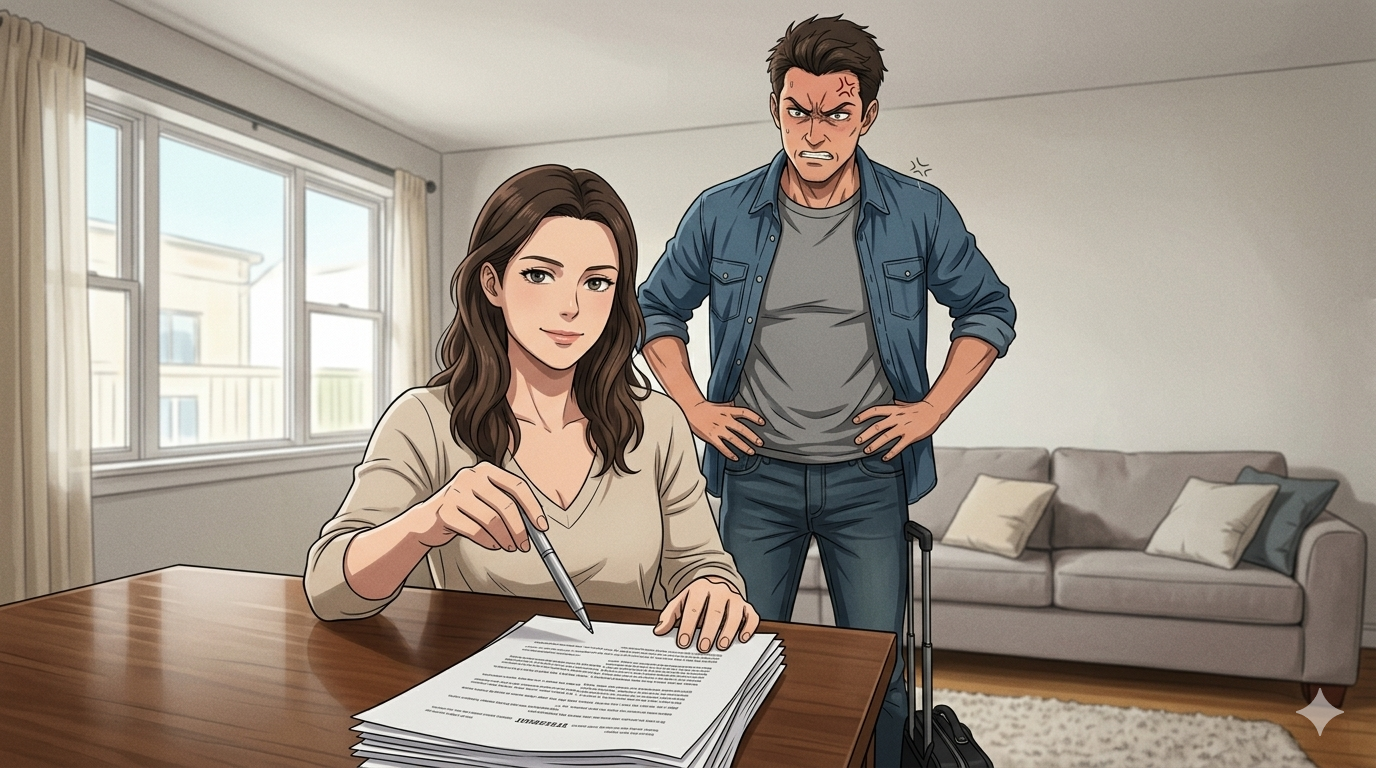
I grabbed the chair.
“No,” I said.
Not because I understood.
But because some part of me understood.
Eighteen years ago.
Rain.
A cheap motel near Brás.
My ring on the table.
Carlos’ hands on my skin.
Roberto looking at my hand and saying:
“You smell like another man.”
I turned slowly to my husband.
“Did you know?”
His face had turned gray.
“Luciana…
“Did you know Carlos was sick?”
His lips quivered.
The doctor looked from one to the other.
“Mr. Ferreira came because he found out that the man involved in the exhibition had tested positive for hepatitis C. At the time, there was also concern about other infections. Her husband asked for emergency tests.
I couldn’t breathe.
“But I was the one…
“Yes,” said Roberto.
Just one word.
And it shattered like glass.
I got up so fast that the chair scratched the floor behind me.
“Did you take exams because of me?”
He did not answer.
The doctor said quietly:
“The notes say that he brought samples from the two.
My mouth opened.
Nothing came out.
Roberto’s eyes filled, but the tears did not fall.
“You were asleep when I took you,” he said.
I kept looking at him.
“What?”
“The next morning.” You cried all night. Then he fainted from fever and shock. I said I was taking you to the clinic because of a virus. They took his blood. Mine too.
My memories twisted.
Yes.
A clinic.
Strong light.
Cotton on my arm.
Roberto standing near the door, not looking at me.
I had thought it was disgust.
He was terrified.
The doctor turned a page.
– Mrs. Luciana, your tests were negative. His didn’t.
My ears began to ring.
“No,” I whispered. “No, that’s impossible.
Roberto looked at his own hands.
“It wasn’t because of you.”
The phrase made no sense.
“So it was how?”
Silence.
Heavy.
Old.
The doctor’s face closed.
“I think this is a conversation you need to have in private. But, medically, the records show that Mr. Ferreira had a history of blood transfusion after an accident at the factory, nineteen years ago.
I remembered.
Of course I remembered.
The accident with the machine in the workshop.
His arm crushed.
So much blood on my shirt that I screamed in the hospital corridor.
A transfusion from an emergency blood bank.
A doctor saying:
“He was lucky.
Luck.
My husband carried death in his blood even before I betrayed him.
But I had given that death a name.
Carlos.
Dirt.
Punishment.
My sin.
I sat down slowly.
The doctor’s voice became soft.
“Mr. Ferreira was advised that the risk of transmission within the marriage could be controlled, but he was scared. He signed terms refusing disclosure. He also refused to resume marital relations without his wife being fully informed. But he never told the lady.
I looked at Roberto.
“Why?”
He swallowed.
The man who had ruled our house with silence for eighteen years suddenly seemed smaller than the pillow he had placed between us.
“Because you had already blamed yourself.
A sob rose up my throat.
He continued, almost voiceless:
“You confessed everything. It was on the floor, holding my feet, saying that it had become dirty. Saying I should throw you away. Saying he deserved anything I did.
He closed his eyes.
“And then the doctor told me that your blood was clean… and mine is not.
My hands began to tremble.
“I thought God was making a joke on me,” he said. “You had sinned, and I was the danger.
— Roberto…
“I was angry. So much anger that I couldn’t see properly. Not just you. From myself. Of my blood. From that hospital. From the idea that if I touched you, if one day you got sick because of me, people would say that I had punished you with an illness.
He laughed once, humorlessly.
“So I did the only thing I could do. I placed a pillow between us.
The pillow.
The white funeral wall.
His eighteen years.
Not because he thought my skin was dirty.
But because he thought his.
I covered my mouth, but the sound escaped anyway.
A broken, ugly sound.
“All these years,” I whispered, “I thought you hated touching me.
“I hated it.
The answer hit me.
Then he looked at me.
“Because I wanted to.”
My tears stopped.
His is not.
“I hated still wanting to hug you after you had betrayed me.” I hated that when your mother died and you collapsed, my first impulse was to lift you up. I hated that after your surgery, I wanted to sit next to you and run my hand over your back until you fell asleep. I hated that every Christmas, when you wore that green dress, my hands reminded me that they were still husband’s hands.
His voice cracked.
“But if I touched you with affection, you would have hope. If I touched you as a husband, I would have to tell you the truth. And if I did, you’d stop blaming yourself and start feeling sorry for me.
“Sorry for you?”
“I didn’t want your pity.
“So you chose my death?”
He shuddered.
“Not death.
“Yes,” I said, standing up. “Death.” You buried me next to you every night and called it protection.
The doctor left in silence.
The door closed.
For the first time in eighteen years, Roberto and I were alone without the security of silence.
He sat on the stretcher, old and tired, his white hair thinning at his temples, his shoulders hunched under a punishment he had built for both of us.
I had imagined this moment many times.
In my fantasies, I would beg.
He would forgive me.
We would cry.
The pillow would disappear.
But truth is never as clean as imagination.
I had cheated on my husband once.
He had betrayed my regret every day after that.
“Why didn’t you leave me?” I asked.
He looked up.
“Because I loved you.”
I laughed, and it came out cruel.
“No. Do not dress cruelty with love.
His face twisted.
“I stayed because I loved you,” he said. “I punished you because you were a coward.
That silenced me.
“I wanted you close,” he whispered. “But not close enough to meet me.” I wanted to be noble before the world and wounded in private. I wanted everyone to say that I was a good man, because if they said enough, maybe I would believe it.
He pressed both hands against his face.
“And every night when you whispered my name, I wanted to turn around.” But then I remembered that motel. And then I remembered my blood test. And I thought: that we both suffer. At least the suffering is honest.
I looked at him for a long time.
Eighteen years ago, I had broken our marriage.
After that, he had preserved the pieces as an altar to pain.
None of us had been innocent.
None of us had ever been free.
The doctor came back with more papers.
Cirrhosis of the liver.
Possible cancerous lesions.
Urgent referral to specialist.
Treatment options.
Evaluation for transplantation.
The words piled up like stones.
Roberto listened calmly, as if the doctor was talking about bus time.
I heard only one thing.
That didn’t happen overnight.
No.
Nothing in our marriage had happened overnight.
Nor my betrayal.
Nor his silence.
Nor the slow poisoning of two lives sleeping back to back under the same ventilator.
When we left the clinic, the sky of Santo Amaro had turned the color of wet gray. The traffic screamed. Sellers called. Rain piled up in the air, but it didn’t fall.
Roberto walked beside me, slower than before.
At the gate, he tripped.
For eighteen years, I had trained my hands not to reach it.
That day, my body forgot about training.
I held his arm.
He froze.
Me too.
His skin was warm under my fingers.
It does not get dirty.
Not dangerous.
Human.
He looked at my hand as if it were a miracle and a sentence.
I should have let go.
I didn’t let go.
We returned home in silence.
The children called that night, one after the other.
Our son, Rafael, shouted first:
“What do you mean liver damage?” Why didn’t anyone know?
Our daughter, Camila, cried on the phone:
“Dad, did you hide it?” Of all of us?
Roberto answered little.
I answered enough.
Not everything.
Some truths belong first to the two people who bled inside them.
That night, I cooked chicken soup.
He ate three spoonfuls.
I took the plate off without fighting.
At bedtime, I stood at the door of the room.
The white pillow was in its usual place, neat and obedient.
Roberto came out of the bathroom, suddenly thinner, his face washed, his hair damp.
He saw me looking at him.
“Luciana,” he said quietly, “I don’t know how to get that out of there.”
Honesty almost broke me.
For eighteen years, I dreamed of throwing that pillow out of the window.
But now, standing before the old battlefield of our bed, I understood something terrible.
A wall can become familiar.
Even a prison can feel unsafe when the door opens.
I walked to the bed and picked up the pillow.
It was lighter than I expected.
Only cotton.
Only fabric.
Not sin.
Not disease.
Not eighteen years old.
I took him to the closet and put him inside.
Then I closed the door.
Roberto did not move.
I lay on my side of the bed.
He continued standing.
“Come,” I said.
His eyes filled.
“I’m afraid.
“Me too.
“I don’t deserve it…
“I didn’t deserve it either,” I said. “But we still gave each other pain. Maybe now we can try something else.
He lay down slowly, keeping a careful distance.
There was still space between us.
But there was no pillow.
For a long time, we stared at the ceiling.
The fan swirled above us, cutting the silence to pieces.
Then, in the dark, Roberto whispered:
– I forgave you, Luciana.
Tears flowed into my hair.
“When?”
“Many times. Then I got angry again.
I almost smiled.
“This looks like marriage.
His breath trembled.
“I’m sorry.”
I turned my face to him.
For eighteen years, I begged for those words without knowing that he owed me others.
“I’m sorry too,” I said.
He raised his hand.
She stopped halfway between us.
Old fear.
An old habit.
Ancient poison.
I moved first.
I put my fingers in his palm.
He inhaled hard, like a man touching fire and discovering that it was just heat.
We didn’t hug each other.
We didn’t kiss.
We just hold hands in the dark.
But that night I slept without dreaming about the motel.
The following weeks were not sweet.
People like clean endings because they don’t have to live inside them.
We live inside ours.
There were hospitals, exams, specialists, bills, bitter medicines, relatives arriving with advice and leaving with gossip. There were days when Roberto vomited until he trembled. Days when I hated him for hiding the disease. Days when he hated me for asking questions too late. Days when we stay in separate rooms because forgiveness, like fever, goes up and down.
One afternoon, while organizing old files for the transplant team, I found a diary.
His.
I shouldn’t have read it.
I read it.
The first entry was from three months after my case.
She cried again tonight. I wanted to touch her hair. I didn’t touch it. I’m not a good man. Good men forgive. Bad men pretend to be good.
Another note.
The doctor says that the risk is low if care is taken. Still, I can’t. What if I pass my disease on to her? What if she stays with me just because she thinks she owes me that? Better that she hates herself than feels sorry for me. God forgive me for writing this.
Then, years later, after my surgery.
She grimaced as she tried to sit down. I almost held her. I stood at the door like a thief. I have made punishment my religion. There is no God in this.
I closed the diary and cried until my chest hurt.
That night, I placed it before him.
He looked embarrassed.
“Did you read it?”
“Li.”
“So you know everything ugly.
“No,” I said. “I know you were lonely too.
His face collapsed.
It was the first time he let me hold him.
Not like husband and wife returning to romance.
But like two exhausted sinners resting among ruins.
His head came slowly to my shoulder.
Then, all his weight.
He cried into my dress like a child.
I held her back carefully, feeling the bones under the skin, the years under the bones.
“I wasted our life,” he said.
“No,” I whispered. “We hurt her. There is a difference.
— Does it exist?
“Yes. Wasted things don’t grow back. Hurt things sometimes come back.
He laughed through tears.
“You got wise.
“I was eighteen years old.
The transplant never happened.
He was too weak, too late, too complicated. The doctors used kind words. Controllable. Palliative. Time. Comfort.
I brought him home because he asked me to.
“Not in the hospital,” he said. “If I have to go, I want to hear the pressure cooker and its bracelets.”
Then our children came.
Rafael de Salvador.
Camila from Curitiba with her two daughters.
The house was filled with slippers, medicine packs, whispered discussions and the smell of saffron milk. Everyone saw us differently then. Not the holy husband and the guilty wife. Not the perfect old couple. Just two human beings who failed each other and still sat side by side in the end.
One night, the rain started.
Heavy summer rain.
The same kind that had fallen eighteen years earlier, when I crossed a line that I could never uncross.
Roberto was leaning on pillows, thinner than memory, watching the water run out of the window.
“Luciana,” he said.
I sat next to him.
— Hm?
“Did he love you?”
The question didn’t hurt as it would have before.
“No,” I said. “He wanted me. I mistook that for being seen.
Roberto nodded slowly.
“And you loved him?”
“No.
“Did you love me?”
I looked at our hands, now joined openly on the sheet.
“Yes. But badly.
He smiled slightly.
“I loved you badly too.
The rain was beating on the zinc covering outside.
After a while, he said:
“Take the pillow out of the closet.”
My heart tightened.
“Why?”
— Please.
I brought him.
The white pillow.
Now old. Softened by the years. Clean, folded, harmless.
He touched it with his fingertips.
“Burn.”
So that night, inside a small metal drum on the porch, with our kids watching from the door and the drizzle wetting our faces, I burned the pillow.
It didn’t burn dramatically.
No big flames.
No thunder coming from the sky.
It caught fire slowly, curling inward, the smoke rising like a weary ghost.
Roberto watched until there was nothing left but black and gray cloth.
Then he closed his eyes.
“Enough,” he whispered.
He died twelve days later.
Not angry.
Not in silence.
His head rested on my lap, my hand on his forehead, our children crying around.
Just before the end, his eyes opened.
“Luciana,” he breathed.
“Yes?”
“No wall.”
I leaned over and kissed his forehead for the first time in eighteen years.
“No wall.”
After the funeral, people came up with the same old phrases.
“He was a saint.
“You were lucky.
“He stayed with you.”
This time, I didn’t smile with a bleeding soul.
I said:
“He was a man. I was a woman. We hurt each other. We love each other. That’s all.
Some were shocked.
Let them stay.
I spent too much time protecting stories that were killing me.
On the thirteenth day, after everyone left, I sat alone in our room.
The bed seemed too big.
The fan was spinning above me.
The closet smelled faintly of smoke.
I touched the empty space where the pillow had lived.
For eighteen years, I thought my sin was the worst thing I had ever done.
I was wrong.
My worst sin was to believe that pain made me holy.
Roberto’s worst sin was to believe that silence made him strong.
We both paid.
We both learned too late.
But never ever.
That night, I slept in the middle of the bed.
Not on my side.
Not on his side.
In the middle.
Where the wall had been.
The rain hit the window, softer now, like fingers asking for forgiveness.
I turned to the empty pillowcase and whispered:
“Sleep, Robert.” I’m no longer on the other side of the border.
For the first time in eighteen years, no one answered on the other side.
And somehow, that silence was finally peace.
The first morning after peace was the cruelest.
I woke up at 5:12 am because Roberto always coughed at that time.
For a stupid second, my hand went across the bed, looking for the glass of water I had ready for him.
My fingers touched only the cold sheet.
Then the memory opened his eyes.
The house was silent.
It wasn’t the old silence, the one with a white pillow breathing between us. This silence had no anger. There was no punishment. There was no wait. It was simply the silence of a room from which a soul had departed and left the furniture behind.
I sat down slowly.
The middle of the bed still kept the shape of my body.
His side was tidy.
Mine was crumpled.
The wall was gone, but the void had learned its place.
In the kitchen, I made coffee for two.
I only realized after pouring the second cup.
For eighteen years, I served him coffee without touching his hand. For the last three months of his life, I held the cup to his lips as he drank like a tired child. Now the cup was before me, steaming to a man whose ashes were still fresh in the sea.
I didn’t throw it away.
I placed it near the window.
“Drink before it gets cold,” I whispered.
No one answered.
And for the first time, I understood that peace was not the same thing as comfort.
On the fourth day after the rituals, Rafael found the diary.
I had wrapped it in Roberto’s old shawl and stored it on the top shelf of the closet. He intended to decide later what to do with him.
But grief makes the children curious. Or perhaps suspicious.
He entered the room holding the diary as if it were a gun.
“Mother,” he said, “what is this?”
Camila looked up from the white mourning clothes she was folding.
My stomach turned.
“Your father’s diary.
“I know that. His voice was tense. “Why does he write about punishment?” Why do you write that you cried every night? What happened eighteen years ago?
Camila was completely still.
Outside, a vegetable seller shouted prices in the street. A pressure cooker beeped in the house next door. The world, brazen as always, went on.
I looked at my children.
They were no longer children. Rafael had gray strands on his temples. Camila had two daughters who called me grandma. Still, at that moment, they looked young, scared and betrayed.
I could have lied.
I had lied by omission for eighteen years.
Their father and I had protected the family’s respectable face until it became a mask glued to our skin.
I was tired of masks.
“Sit down,” I said.
Rafael did not move.
“Sit down,” I repeated, in the voice I used when he was ten years old and tried to hide a broken window.
This time, he obeyed.
I counted.
Not all in the ugliest details. A mother does not need to hand the whole knife to her children. But I counted enough.
Carlos.
The rain.
The motel.
My confession.
Their father’s blood test.
The disease he hid.
The pillow.
The years we spent punishing each other while teaching our children to believe we were quiet because we were worthy.
Rafael’s face has changed many times.
Disbelief.
Disgust.
Anger.
Pain.
Camila covered her mouth and began to cry.
When I finished, no one spoke.
Then Rafael stood up.
“So the father suffered because of you?”
I accepted the blow.
“Yes,” I said. “And I suffered because of him. One thing does not erase what I did.
“You destroyed him.
“No,” Camilla said suddenly.
Rafael turned to her.
“What?”
“She made a mistake,” Camila said, tears streaming down her face. “But the father chose what he did later. He chose silence. He chose the pillow. He chose not to tell that he was sick.
“He was protecting her.
“He was also protecting his own pride.
The room shook with the truth told by his own daughter.
Rafael looked at me as if I had stolen his father a second time.
“Why are you telling you this now?” He asked.
“Because, if I die with lies still standing in this house, your children will inherit ghosts and call them values.”
His jaw closed.
He left without saying anything else.
The door slammed hard.
Camila stayed.
After a while, he came and sat next to me on the floor. Not close enough to console. Not far enough to accuse.
“I thought you and your dad had a simple marriage,” she said.
I smiled sadly.
“No marriage is simple. Some are just better hidden.
“Did you love him in the end?”
“In the end,” I said, “I finally loved your father without begging him to be innocent.
She then leaned her head against my shoulder, and we cried together, not as daughter and mother who understood everything, but as two women who had learned that men are not gods, women are not temples, and homes can be built on buried screams.
Rafael did not call for nine days.
In the tenth, he came alone.
I was arranging Roberto’s papers on the dinner table. Insurance forms. Hospital bills. Old recipes. A receipt for the green dress he had bought for me twelve years earlier and never delivered.
I found it still wrapped in brown paper, hidden behind the tax files.
When Rafael entered, I held him.
He looked at her dress. Then to me.
“I read the entire diary,” he said.
Absent.
He sat down before me.
His eyes were red.
“He wrote about me,” he said.
“Yes?”
“He wrote that when I was born, he was afraid to hold me because he thought his blood made him dangerous.
I closed my eyes.
“He held you anyway,” I said. “I put you in his arms and told him to stop nonsense.”
Rafael swallowed.
“He wrote that you saved money hidden for my engineering college because he had spent the bonus on treatment.
“Yes.
“He wrote that he once saw you sleeping outside Camila’s test room because she had a fever, and wanted to sit next to you, but he stayed behind a column.
I remembered that day. My back hurt for a week because of the plastic chair.
Rafael clasped his hands against his eyes.
“I’m mad at you,” he said.
“It must be.”
“I’m also angry with him.
“It must be.”
“I don’t know where to put that.
I pushed the diary at him.
“Put a part in there. The rest will move inside you for years. Let it move. Don’t build a house around it.
He laughed once, broken and against his will.
“You speak as your father spoke in the last few days.
“No,” I said. “Your father learned to speak like me.
For the first time since the funeral, my son smiled.
It lasted only a second.
Then he reached across the table and touched mine.
It was not forgiveness.
Not yet.
But it was contact.
Sometimes, this is the first bridge.
The guests on the thirteenth day were gone, but gossip doesn’t need food to survive.
She returned for her relatives.
A cousin called Camila and said:
“Your mother is talking too much now that your father has died.
An aunt said to Rafael:
“A woman’s mistakes must be buried along with her husband’s greatness.
Someone whispered that I had trapped Roberto in shame.
Another person said that he had been a saint for staying with me.
In the beginning, I burned inside.
Then I got tired.
At the first monthly ceremony of his death, when the relatives gathered again in white clothes and caring faces, I placed Roberto’s diary, his medical file, and his final letter on the table.
Not the entire diary.
Some truths belonged to us.
But his letter was clearly addressed.
To my children and to anyone who wants to make a statue of me.
His handwriting had become weak near the end, but the words remained standing.
Don’t call me a saint. Saints do not sharpen their silence and sleep next to him. Your mother broke my trust once. I broke her spirit for eighteen years. We both paid. Do not use my death to punish it. Don’t use her mistake to worship me. If you loved me, let the truth be human.
No one spoke after Rafael read it aloud.
The aunt who called him noble adjusted the hem of her dress and looked at the floor.
I didn’t feel victorious.
Vitória makes noise.
That was quieter.
It was the sound of a locked room opening up and finding, not monsters, but two frightened people sitting in the dust.
After that day, fewer relatives came.
The house breathed better.
A month later, a letter arrived without an sender.
My name was written in a handwriting I hadn’t seen in eighteen years.
Luciana.
My blood ran cold.
Carlos.
I stood by the door with the envelope in my hand as the afternoon sun burned through the curtains. For years, he had been less a man in my memory than a stain. A name that I carried like coal in my throat.
Shelter.
He had seen Roberto’s obituary in the newspaper.
He wrote that he was sorry.
He wrote that he had been ill for years.
He wrote that he did not know at the time, then he knew, and then he was too embarrassed to look for me.
He wrote that he wanted to see me once before leaving São Paulo forever.
In the end, he had written a phone number.
I stared at him for a long time.
Then I called.
We met in a square near Brás, not far from the neighborhood where I had ended one life and started eighteen years of another.
Carlos arrived late.
He no longer seemed like temptation.
Time had removed that insult.
Her hair was thinning. The belly had grown. His face carried that tired flaccidity of a man who made up many excuses and believed some.
When he saw me, he stood up.
“Luciana,” he said.
My name on his mouth did nothing.
I sat on the bench.
“Say what you came to say.”
He looked embarrassed.
Good.
“I’m sorry for Roberto.
“You’re not allowed to say his name kindly.”
He cringed.
A child ran past with a red balloon. Somewhere, an old man laughed at something on his cell phone.
“I didn’t know at the time,” Carlos said.
“About your illness?”
“No. I swear. I found out later.
“How long later?”
His silence answered before his mouth.
— Six months.
Six months after the motel, while I was still sleeping next to a pillow and Roberto was learning to hate his own blood.
“You could have told us.”
“I was afraid.
I looked at him then, I really looked.
Fear.
Men used this word as if it were holy water. Roberto was afraid. Carlos was afraid. I was afraid. Among our fears, an entire marriage drowned.
“You let us suffer in ignorance,” I said.
“I thought maybe nothing had happened.
“Did you think or wait?”
He looked away.
“Both.
For a moment, I wanted to slap him.
Not because I loved Roberto.
Not because he hated Carlos.
But because the young woman I had been deserved at least a clean truth from someone.
Instead, I opened my bag and pulled out a small package.
Inside was a hint of gray gray.
The pillow.
I had saved some without telling anyone.
I put him on the bench between us.
“What’s that?” He asked.
“The wall you helped build.
His face has lost its color.
“You weren’t the only one who built it,” I said. “I built it. Roberto built it. Shame built. Pride built. But you carried a brick and fled before the house collapsed.
He began to cry.
I didn’t feel anything.
That surprised me.
For eighteen years, I feared the memory of that man. I thought that seeing it would reopen some secret hunger, some old guilt, some proof that I had once been weak.
But he was just a man in a bank.
And I was no longer the woman who needed him to explain who I was.
“Keep it,” I said, pushing the package at him.
“I don’t deserve it…
“It’s not a gift.
He caught it with trembling fingers.
I stood up.
– Luciana, can you forgive me?
I looked at him from above.
“No.
His face collapsed.
“But I can leave you behind,” I said. “That’s more useful.
I left before he could answer.
At home, I took a shower.
Not because I felt dirty.
Because the day was hot.
That night, I wore the green dress that Roberto had bought and never given to me.
It was a bit old-fashioned. The bar was heavier than I liked. But when Camila saw me by video call, she smiled.
“Was it the father who chose?”
“It was.
“He had good taste.
“It tasted late,” I said.
She laughed.
Rafael came two weeks later with his wife and son. He brought tools and repaired the loose railing on the balcony that Roberto promised to fix since before the disease worsened.
While he worked, my grandson played on the bed, rolling around.
“Did Grandpa sleep here?” He asked.
“Yes,” I said.
“And you slept here?”
“Yes.
“What was in between?”
Rafael froze.
I answered before he could.
“Once, a pillow. Then, nothing.
My grandson thought about it very seriously.
“Nothing is better. It has more space.
Rafael turned his face away.
His shoulders trembled once.
Not anger.
Grieving, finally finding a softer door.
The months passed.
I started doing volunteer work twice a week at the hospital where Roberto received treatment. Not in the liver ward. I wasn’t that brave. I was in the counseling room with families who spoke in whispers, women who folded their shame on the edges of their skirts, men who took diagnoses as if the role might insult them.
I never told my whole story.
He didn’t need to.
I just said:
“Tell the truth before silence becomes another disease.
Some listened.
Some don’t.
But sometimes a woman would hold her husband’s hand after I spoke. Sometimes a man would look at his wife and cry. Sometimes a daughter would ask the question that everyone else feared.
On those days, I returned home tired, but lighter.
On the first anniversary of Roberto’s death, the children came again.
Without much ritual.
No crowd.
Only us.
We cooked his favorite chicken soup, too soft, the way he liked it. Camila’s daughters made a crooked garland out of paper. Rafael placed fresh jasmine near the photograph.
Not the big framed wedding photo.
This one was still stored.
It was a more recent photo.
Roberto in the last month of his life, sitting by the window, thin and smiling slightly, as if peace had come late and he was too polite to complain.
After lunch, we went to the balcony.
The metal drum was still there.
I had cleaned it up, but a black mark remained in the background, stubborn as memory.
Rain was gathering over the city.
Camila asked:
“Do you miss him?”
“I do,” I said.
Rafael asked:
“Do you regret telling us?”
“No.
The first drops fell.
I looked up.
For years, the rain belonged to my mistake. Then to his death. Then to the burning pillow.
Now it was just rain.
Water from a sky that cared no
It fell on all of us in the same way.
That night, after the children had slept, I sat alone in the room.
The bed no longer scared me.
I changed the sheets. I moved the closet. I placed a small light fixture near the middle, where the wall had been. On the bedside table were Roberto’s diary and my own new notebook.
I started writing because memory, if abandoned, becomes poison or myth.
I opened it to a blank page.
At the top, I wrote:
I cheated on my husband once.
So I stopped.
For a long time, I heard the rain.
Then I added:
And we both cheated on ourselves for eighteen years after that. But in the end, we tell the truth. In the end, we removed the wall. In the end, that was enough to let love die honestly, and sometimes honest love leaves more light than a perfect love ever would.
I closed the notebook.
I lay in the middle of the bed.
Not as a punishment.
Not as proof.
As a woman who crossed all boundaries within her own life and finally returned home.
Outside, the rain continued to fall.
Inside, no one slept on the other side.
And this time, I didn’t whisper to the empty room.
I turned off the lamp.
I put my hand where Roberto’s hand once met mine in the dark.
So I slept.
Not forgiven by everyone.
Not innocent.
Not a saint.
Book.