He Took Her House at 78—Then One Call Changed Everything
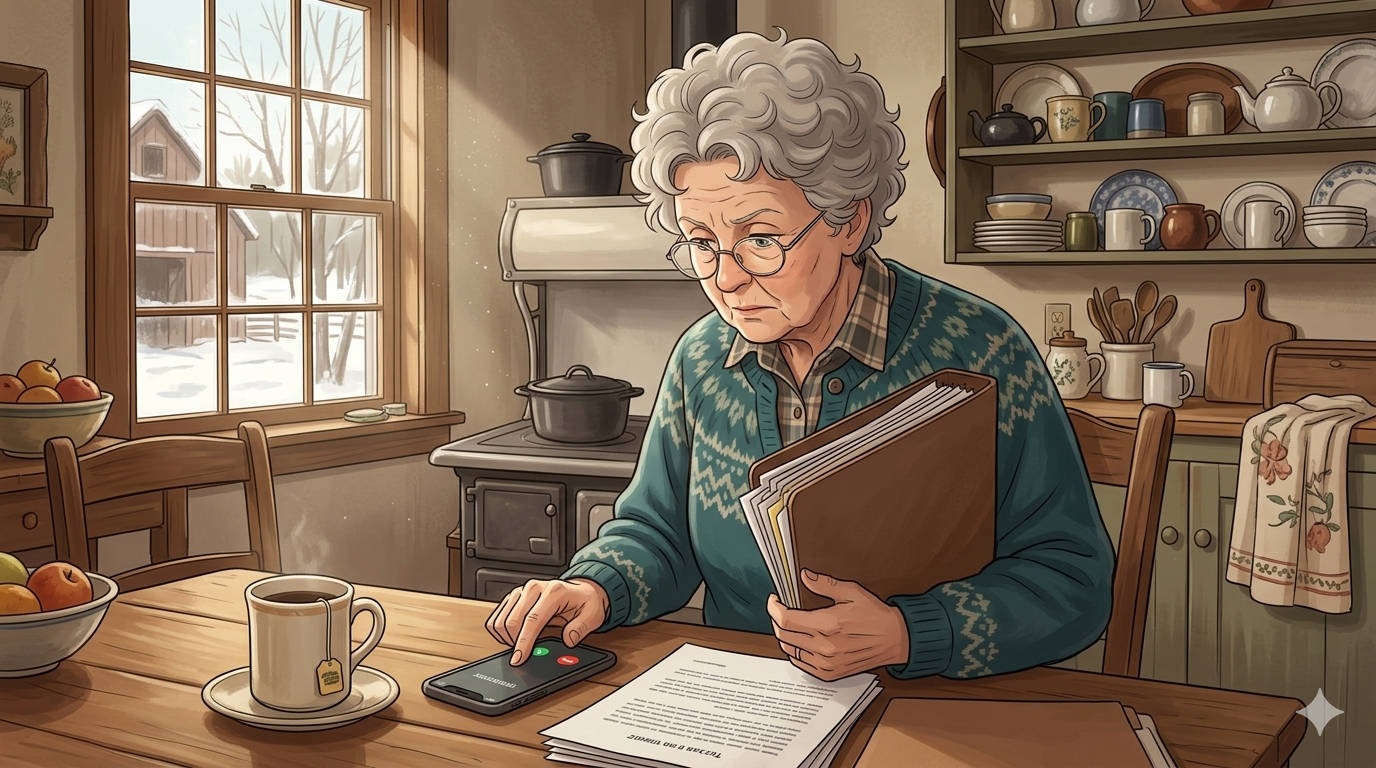
At seventy-eight, I walked out of a Hartford courtroom with a suitcase in one hand and a folded court order in the other.
The marble hallway swallowed the sound of my steps.
Behind me, my husband stayed near the courtroom doors, speaking in low, satisfied tones with his attorney, as if he had just closed a profitable deal.
Before I reached the elevator, he called my name.
I turned because after fifty-two years, some reflexes still survive even after love does not.
He leaned closer, his expression almost amused.
“You won’t be part of the grandkids’ routine anymore,” he said.
“I made sure of it.”
I remember thinking that cruelty sounds very calm when it has been rehearsed.
The house on Birchwood Lane had been ours for forty-one years.
It was the kind of Connecticut home people slowed down to admire in December, with the wraparound porch, white columns, leaded glass by the front door, and an old maple tree that went gold every October like it was putting on a show for the neighborhood.
We raised our son Daniel and our daughter Claire there.
We hosted Christmas Eve there.
We buried two dogs in the side garden.
I painted the kitchen twice, refinished the pantry shelves myself, and knew exactly which step on the back staircase creaked in humid weather.
By the time the divorce was finalized, that house had been transferred into a company I had never heard of.
For years, I told people my marriage had lasted because of patience and good coffee.
It was a neat answer, the kind older women give at church dinners when younger couples ask for secrets.
The truth was less poetic.
I stayed.
I carried.
I absorbed.
I turned conflict into schedules and disappointments into chores because children notice less when dinner is on time.
Charles had always liked control.
In our thirties, it looked like ambition.
In our fifties, it looked like competence.
In our seventies, stripped of charm, it looked exactly like what it was.
The first signs came in late October.
A billing statement I expected at home was redirected to a post office box in Westport.
Charles began closing his laptop the moment I entered the den.
He started taking Saturday drives that produced no groceries, no hardware store bags, no ordinary evidence of errands.
Once, while hanging his coat, I caught a perfume on the collar that was floral, expensive, and entirely wrong for me.
I said nothing.
Silence, used properly, can be its own form of investigation.
In December I found a card in the inside pocket of his winter coat.
Heavy cream paper.
Careful handwriting.
Signed with a single initial.
K.
I stood in our mudroom with that card in my hand while snow tapped the windows, and for the first time in decades I felt something colder than hurt.
Hurt suggests surprise.
What I felt was recognition.
When I asked him about it, I chose breakfast because daylight makes lies look smaller.
He spread marmalade on toast, folded his napkin, and did not bother pretending confusion.
“I want to end the marriage,” he said.
“My attorney will be in touch.”
No apology.
No explanation.
No shaky confession about loneliness or age or mistakes.
Just paperwork in human form.
The legal process moved so
quickly it felt prearranged, because it was.
The title to Birchwood Lane had been shifted into Birchwood Residential Holdings LLC.
Several accounts I had believed were joint were reclassified or emptied into investment vehicles I had never seen.
My attorney at the time was kind, well-meaning, and out of his depth.
He accepted what opposing counsel produced.
He did not follow the trail backward.
So I sat in court and listened to figures described as marital reality when they were really only the remains Charles had left behind.
When it was over, I drove north to my sister Ruth’s farmhouse in Vermont.
Ruth met me at the door, took one look at my face, and pulled me into a hug without a single question.
Her place smelled like wood smoke, cinnamon tea, and old pine floors.
The quiet there was not the cruel quiet of a courtroom.
It was the kind that lets you hear your own thinking again.
For three weeks, I slept in her guest room and wrote lists on a yellow legal pad.
Groceries.
Bank names.
Dates.
Phrases Charles had used.
I needed things to line up in ink because nothing in my life lined up in my head.
Then one afternoon, while staring at a half-finished page, I stopped asking what he had done to me.
I asked how, exactly, he had done it.
I called my divorce attorney and requested every file.
He sent them over with a note that was apologetic without saying anything useful.
When I phoned him and asked whether he had verified the formation date of Birchwood Residential Holdings, he fell silent.
“I didn’t check that,” he finally said.
That sentence did not break me.
It straightened me.
I booked an appointment in Hartford with Lydia Mercer, a litigator known for untangling concealed assets and fraudulent transfers.
Lydia was younger than my children and had the kind of steady gaze that made excuses die before they reached her desk.
She did not speak to me like I was fragile.
She asked for dates, deed copies, county filings, tax records, account statements, and every scrap of correspondence I had.
Then she said, “We start with the company formation date.”
I signed her retainer that afternoon.
A few days later, Daniel called me.
His voice had the careful shape of somebody repeating words that did not begin with him.
“Mom, Dad says this is only going to drain you,” he said.
“He says everybody needs peace.”
Peace.
The word landed like an insult.
“Tell your father I’m fine,” I said.
Claire came the following week with white tulips and a smile that never settled naturally on her face.
She talked about stress, about everybody wanting things to calm down, about how hard this all was at our age.
I poured tea and let her circle the real subject until she ran out of softer words.
“If there’s a new offer,” I said, “it can go through attorneys.”
She lowered her eyes to the flowers in her lap.
In that moment, I understood something I had not wanted to know.
Charles was not merely lying to me.
He was arranging the emotional furniture around me so that every door led back to him.
Six weeks into Lydia’s review, a thick envelope arrived by messenger.
She waited until I was seated before sliding the documents across her desk.
Inside were county records, internal LLC filings, account transfers, billing address changes, and printed emails obtained through discovery requests.
It was the timeline that mattered.
Birchwood Residential Holdings had not been created years earlier for estate planning, as Charles claimed.
It had been created after he had already begun consulting divorce counsel.
I turned another page and found the line that made my pulse go cold and clean.
I want to be sure the property is outside the marital estate before I file.
There it was.
Not misunderstanding.
Not memory.
Intent.
Lydia looked at me over folded hands.
“We can move to reopen the financial judgment,” she said.
“We can seek sanctions and an emergency order preventing any sale of the house.”
I nodded once.
“Do it.”
The motion was filed that afternoon.
Four days later, while I was helping Ruth stack split wood near the shed, my phone lit up with a Connecticut number I did not recognize.
The woman on the other end identified herself as a nurse from Greenwich Hospital.
“Mrs.
Whitmore,” she said, “there’s been an urgent situation involving your husband.
He was brought in by ambulance from the Birchwood Lane residence.
The police are there now, and there are documents in the home with your name on them.
An officer asked that we make sure you were contacted.”
For a moment, the world narrowed to frost on firewood and the sound of Ruth’s gloves brushing against bark.
I asked whether Charles was alive.
The nurse said yes.
Stable, but disoriented.
By evening, I was back in Connecticut.
A patrol car sat outside Birchwood Lane with its lights off.
The front door was ajar.
The house I had loved looked violated in a way that had nothing to do with law.
Lamps were unplugged, framed photos had been removed from the hall, and the living room carried that unmistakable halfway scent between home and departure.
Someone had been preparing to leave quickly.
Officer Ramirez met me in the foyer.
He was gentle in the deliberate way officers become when they sense the injury in a room is larger than the visible event.
“Your husband appears to have fallen in the study,” he said.
“Paramedics transported him.
We found a folder under his arm when they moved him.
Because your name is on related documents and there’s an active property dispute on file, we need you to identify a few things.”
The study door was open.
Charles’s desk drawers had been yanked halfway out.
The wall safe behind the painting stood open.
On the desk sat an unsigned contract for the sale of Birchwood Lane, a burner phone, and an empty velvet jewelry box I had not seen in years.
Then Officer Ramirez placed a blue file folder in my hands.
My maiden name was written on the tab.
At the hospital, Charles looked smaller than I had ever seen him.
Age had a way of arriving all at once when vanity lost its footing.
There was an oxygen line under his nose, adhesive on his wrist, and fear in his eyes so naked it startled me.
When he saw the blue folder, his hand trembled.
“Did she get it?” he whispered.
I did
not sit down.
“Who?”
“Katherine.”
It was the first time he had ever said her name out loud to me.
“Don’t let her take it,” he said.
“She’ll say it was all my idea.”
I stared at him.
“Wasn’t it?”
He closed his eyes.
That was the closest thing to an answer I got that night.
Back at Ruth’s kitchen table, Lydia and I went through the blue folder page by page.
It contained printed emails, draft letters, trust amendments, property transfer instructions, and handwritten notes in Charles’s unmistakable blocky script.
Katherine Sloan was not just a romantic distraction.
She was a licensed real estate consultant he had become involved with after meeting her at a charity event in Westport.
Somewhere between flattery and greed, she had become an architect of the scheme.
The documents were worse than I expected.
There were drafts of emails to Daniel and Claire saying I wanted a quiet life and less family obligation.
There was a proposed trust amendment threatening to delay educational gifts for the grandchildren if the children did not “support transition decisions.” There were notes about creating urgency, about selling Birchwood before “she has time to question chain of title,” and about moving certain valuables off-site.
One message from Katherine said, We need the children aligned before filing.
If they think she wants distance, the grandkid schedule issue solves itself.
I read that line three times.
The house had not been the cruelest theft.
He had tried to steal my place in the family and replace it with a story.
Lydia amended our motion the next morning.
By noon, the court issued a temporary order blocking any sale or further transfer of Birchwood Lane and preserving all related records.
By the end of the week, Katherine Sloan had been subpoenaed.
Daniel came first.
He sat across from me in Lydia’s conference room, elbows on his knees, staring at the table with a face I remembered from childhood only after he had broken something and knew it.
Lydia placed the printed draft email in front of him.
“I never got this version,” he said quietly.
“But you got something,” I said.
He nodded.
Charles had told both children I wanted less noise, fewer visits, fewer overnight stays with the grandchildren, more quiet.
He said the divorce was mutual.
He said I was tired and preferred distance.
When they hesitated, he reminded them that college funds, family gifts, and business support all ran through structures he controlled.
Claire cried when she saw the trust draft.
Not polite tears.
Devastated ones.
“He told me you were overwhelmed,” she said.
“He said you wanted us to stop dropping by without asking.”
“I waited my whole life for those children to drop by without asking,” I said.
That was the first moment both of them truly understood what had been done.
Charles’s deposition was two weeks later.
He arrived in a dark suit that hung too loosely on him, with a fresh hospital pallor and the same instinct for performance.
He called the transfer estate planning.
He called the timing coincidental.
He called Katherine a consultant.
He called my concerns emotional.
Lydia let him talk.
Then she walked him through the dates one by one.
The consultation with divorce counsel.
The LLC formation.
The property transfer.
The communications with Katherine.
The draft sale contract.
The trust language aimed at the children.
The false statements in his financial affidavit.
Each answer tightened the room.
When Katherine sat for her deposition, she arrived with perfect hair, understated pearls, and the strained confidence of a woman who had been told charm still counted as strategy.
It held for less than an hour.
Lydia produced the messages.
The billing records.
The burner phone data.
The unsigned contract.
The note in Katherine’s own hand about removing “sentimental obstacles.”
Katherine stopped meeting anyone’s eyes.
By the time the hearing resumed, even Charles’s attorney had shifted from swagger to damage control.
The judge did not.
She had the email about the marital estate.
She had the asset timeline.
She had evidence of concealment, coercive leverage over the children, and an attempted sale during pending litigation.
Her ruling was delivered in a voice so measured it somehow made the consequences sound harsher.
She found that Charles had engaged in intentional concealment and fraudulent conveyance.
She vacated the financial portion of the divorce judgment, voided the transfer of Birchwood Lane into the LLC, imposed sanctions, and restored the property to the marital estate for equitable redistribution.
Then, citing his bad faith, dissipation, and manipulation, she awarded me exclusive ownership of the house, along with a substantial share of the remaining liquid assets and legal fees.
Charles did not look at me when the ruling ended.
Outside the courthouse, reporters were not waiting.
No one clapped.
There was no cinematic thunder.
Just a windy Connecticut afternoon and my daughter gripping my arm so tightly I could feel her apology without her speaking.
Daniel said it first.
“I should have called you sooner.”
Claire said, “I’m sorry,” and this time the words did not come wrapped in anyone else’s script.
The first Sunday the grandchildren came back to Birchwood Lane, the maple was beginning to turn.
I stood on the porch and watched them race up the walk like nothing in the world had been broken by adults.
My youngest granddaughter threw herself into my waist and asked whether I had kept the cocoa mugs with the little painted snowflakes.
“I kept everything that mattered,” I told her.
That winter, I repainted the study.
I had every right to leave it exactly as it was and call the room cursed, but I was tired of his choices setting the temperature of my life.
I opened the safe, removed every last document, and turned the room into a library with a reading chair by the window.
Ruth laughed when she saw it and said it was the most expensive act of redecorating in New England.
Charles sent one note from a rehabilitation center in January.
Katherine had disappeared the moment the accounts froze and the subpoenas spread wide enough to catch everyone.
His handwriting was shakier than I had ever seen.
I never thought you’d fight, he wrote.
That was the truest thing he had said in years.
I did not go see him.
I did not answer the note.
The children handled what remained of their relationship with him in their own ways, which was their right.
I had spent too many decades mistaking endurance for virtue.
People still ask me, quietly, whether I feel sorry for
him.
They mention his age.
They mention his fall.
They mention the length of our marriage as if time itself should earn him a pardon.
Maybe some believe it should.
Maybe some believe that after fifty-two years, mercy ought to outrank truth.
I only know this: he did not lose me because he grew old.
He lost me because he chose, step by deliberate step, to turn love into leverage, family into strategy, and a lifetime into paperwork.
Whether a man deserves forgiveness after that is a question people can answer for themselves.
I already answered it when I unlocked my front door and walked back into my own house alone.

